

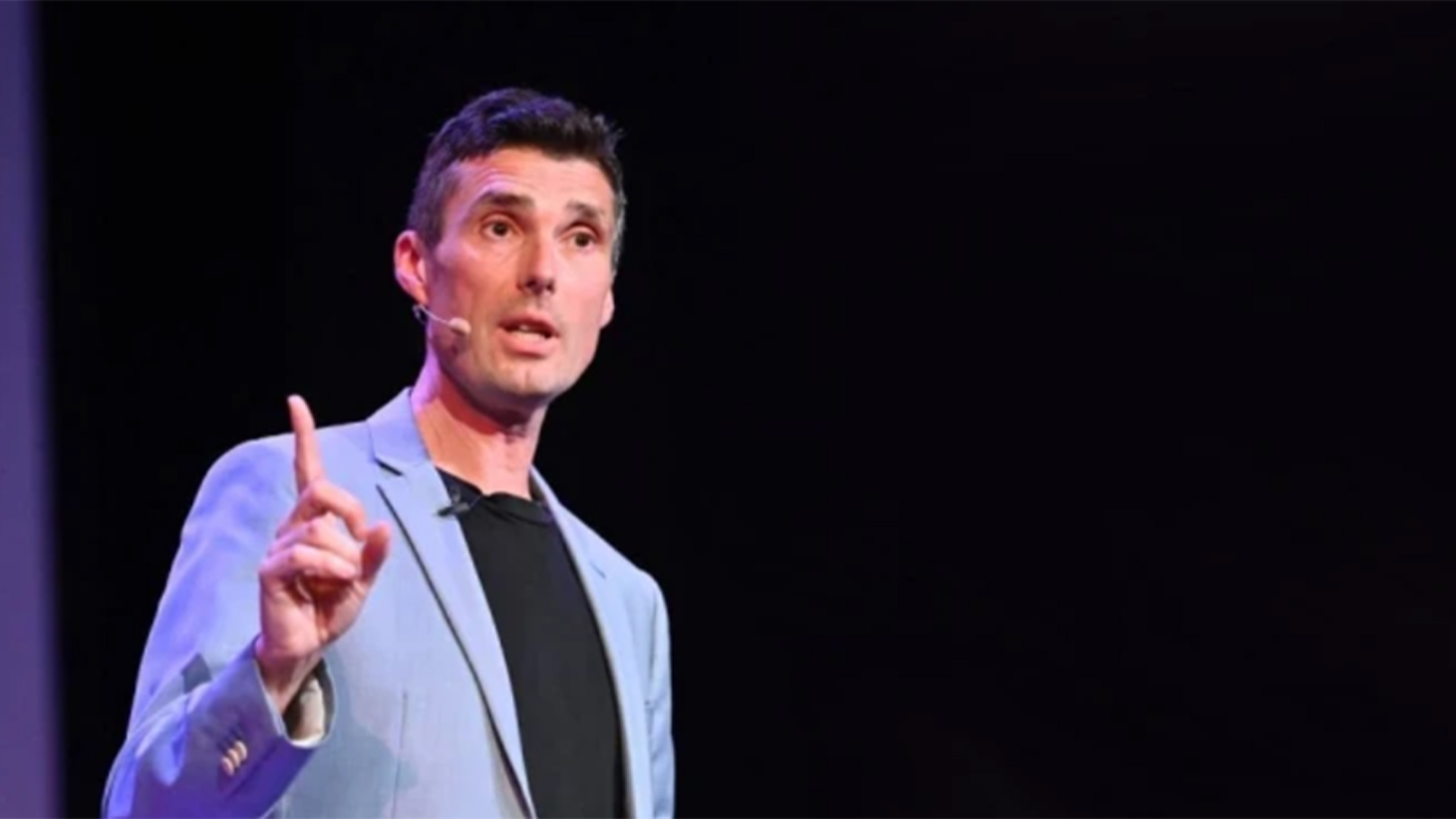
This exclusive interview with Alex Moffat was conducted by Tabish Ali of the Motivational Speakers Agency.
A rubber hand, a paintbrush and a few seconds are enough to make someone question what their brain believes. For Alex Moffat, this simple illusion opens up a much bigger discussion about perception, unconscious bias and how we respond to change.
An award-winning magician, certified brain-based coach and NeuroLeadership Institute facilitator, Alex combines neuroscience with live cognitive illusions to challenge how audiences think and make decisions.
Speaking exclusively to AI Speakers Agency, he explains how our brains can be influenced without us realising, why employees often struggle with organisational change, and how understanding these responses can help leaders make better decisions and build more adaptable teams.
Question 1. How do you combine cognitive illusions and audience participation to create a memorable keynote experience?
Alex Moffat: “Highly interactive. There are highs and lows of engagement because, like a magic show, you don’t want to overwhelm people with wows and surprises for the whole thing. You’ve got to take them on a journey and then bring them back so they have time to reflect.
“It’s highly interactive but cleverly interspersed to take them on this journey. Entertaining would be another thing.
“There are surprise moments, aha moments. I even have a little bit of comedy in there with some crafted lines. I’m not a comedian, but they do get laughs, and the blend of all that is an experience in itself.
“I also start with the end in mind. That’s the magician in me. When it finishes, it brings home something that happens right at the beginning with their brains that they don’t realise at the time.
“A bit like a Derren Brown show, where at the end it unravels everything you’ve just experienced. I like to do that to highlight the overall message of the keynote, the key messages, give another wow moment, but also give another experience that closes the keynote. It wraps it up nicely.”
Question 2. How do you select and adapt neuroscience concepts and cognitive illusions to meet an organisation’s specific objectives?
Alex Moffat: “Like most speakers, there’s the discovery meeting to understand and align the speaker to the brief. Once hired, there’s a deeper briefing meeting where I’ll understand the objectives, the challenges, the industry and do some research into the people as well.
“Who’s in the audience? What level of experience? What tiers of leadership are in there? It’s about understanding first.
“Then it’s the curation. I’ve got different neuroscience concepts and neuroleadership insights that I can weave in or discard depending on what the brief is.
“Sometimes I go, “That one would be perfect. This is a brilliant one, but it’s just not right for that keynote.”
“It’s the same with the experiences. I’ve got so many illusions, whether it’s the audience-wide ones or the individual ones, that are great experiences that I have to keep to the side.
“I think Stephen King said with writing, it’s “killing your darlings”, which is paraphrased from an old writer.
“It’s a bit like that where I go, “I love doing this one, but it’s not right for that keynote.” So I’m going to leave it to the side and bring in the ones that are going to communicate the brief as much as possible for that client.
“The most important thing is impact for the audience, creating an experience that’s relatable with personalised content.
“The content itself, the actual learning, has got to be impactful and evidential so that you can leave knowing that the audience is going to take away practical things as well as having a great experience.”
Question 3. What can cognitive illusions teach us about unconscious decision-making, bias and the way information is framed?
Alex Moffat: “The University of New South Wales School of Psychology in Australia did a study in 2019 on the brain and how it makes decisions.
“We’ve got the non-conscious brain and the conscious brain, and it’s our non-conscious brain that’s the dominant one that rules our lives.
“They found that the non-conscious brain makes decisions up to 11 seconds ahead of the conscious brain pressing the button on that decision and going, “Yep, that’s it.”
“But we don’t realise it. It’s often in the way we interpret information, the way information is framed and the way questions are framed.
“And, of course, the expectation that we have based on our experiences and knowledge, because a lot of decisions come from what we’ve experienced in the past.
“But then it’s clashing with the information that we’re seeing and hearing, how that’s framed and how we are interpreting that reality.
“What I do with cognitive illusions is help expose that.
“I’ll do demonstrations showing that the way information can be framed forces the mind to go in a certain direction before people have really thought about it consciously.
“If I explained it in a different way, matter-of-factly, there’d probably be a balance of decisions. But I help sway them, expose what’s happened, and they realise how their brain has been led unconsciously in advance.
“That helps them realise what’s going on.
“The more someone experiences that, the more they can learn to pause, understand they’ve got biases and recognise that they’re going to be led by their unconscious brain through the way information is framed.
“They’re then more likely to pause and do something about it rather than always going with their first thought or prediction. They can challenge it and make more balanced decisions.”