
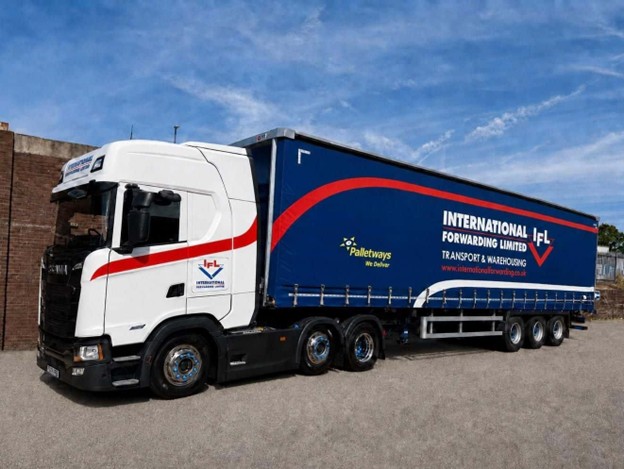

Getting freight from one place to another sounds simple. In practice, your choice of haulage provider affects costs, customer relationships and your ability to keep operating when things go wrong. A good provider supports your supply chain; a poor one creates delays, damage and claims.
For any business that moves goods regularly, commercial haulage across the UK is an important operational decision. Many businesses compare providers only after problems arise. Clear criteria help you avoid disruption and choose a service that can grow with your business.
Fleet quality and compliance
Ask about vehicle condition, maintenance schedules and backup arrangements rather than judging reliability by fleet age alone. Emissions compliance is also important when deliveries enter regulated charging zones.
For heavy goods vehicles, Euro VI is the relevant minimum emissions standard for avoiding charges in England’s Clean Air Zones. Euro 6 is the corresponding terminology for light-duty diesel vehicles. London’s schemes have separate requirements, so check each vehicle and destination using the relevant official checker.
Fleet size and composition matter too. A haulier operating only one type of vehicle may struggle to match the right vehicle to your cargo. Look for a provider able to offer transit vans for smaller consignments, rigid vehicles for medium loads and articulated lorries for larger shipments.
Location and network coverage
The Midlands offers access to major roads such as the M6, M1, M40 and M42, but compare actual routes with your regular destinations.
Network coverage is particularly important if you serve several parts of the country. If your regular destinations include London, Manchester, Leeds and Bristol, choose a haulier with a dependable service across those routes. Ask whether collections and deliveries are handled by its own drivers or passed to subcontractors.
Subcontracting is common, but can create inconsistent standards and unclear accountability. Ask how subcontractors are selected, monitored and briefed. For time-critical or high-value freight, consistent handling and clear responsibility should be priorities.
Full loads versus part loads
Not every shipment fills an entire vehicle. Businesses with changing volumes need cost-effective options for both full and smaller consignments.
A haulier that only handles full loads may not suit a business whose orders vary from week to week. Part-load services can make better use of available vehicle space by combining compatible consignments.
Look for genuine flexibility: full loads when you need a dedicated vehicle and part loads when your consignment is smaller. Ask how prices are calculated, whether minimum charges apply and how delivery times differ between the two services. Understand the pricing structure before signing to avoid unexpected costs.
Experience in your sector
Commercial freight is not the same across every industry. Moving aerospace components requires different handling from transporting food and beverage pallets. Healthcare logistics may involve specific compliance requirements, while fast-moving consumer goods deliveries can depend on strict retailer booking windows.
Depending on the goods, this could include temperature-controlled transport, tail-lift vehicles for sites without loading docks, specialist handling, accurate documentation or careful coordination with warehouse teams. It should also understand how much flexibility your delivery schedule allows.
Ask prospective providers which sectors they serve and whether they have experience transporting goods similar to yours. Request relevant examples, references or details of their procedures.
Customer service and communication
When a delivery is late or a consignment is damaged, how quickly can you speak to someone who can help? The answer can reveal more about a haulage provider than its sales presentation.
Slow email responses, difficult-to-reach account managers and limited shipment information can leave your team unable to answer customers’ questions.
Ask how the provider communicates during normal deliveries and when problems arise. Find out whether you will have a named contact, access to live tracking and timely updates about delays. Clarify who investigates damage or missing goods, how incidents are reported and how quickly claims are handled.
Financial stability and longevity
Haulage is a capital-intensive industry. Vehicles, insurance, fuel and maintenance all involve significant costs, while driver recruitment can place additional pressure on operators.
Consider its trading history, available financial information, insurance cover, operating credentials and customer references. Companies House records can provide useful background on a UK business.
Ask what happens if the company cannot fulfil a booking because of a vehicle breakdown, staff shortage or other disruption. Review its service agreement, liability limits and claims procedures before committing. Make sure the insurance arrangements are appropriate for the value and type of goods you transport.
Putting it together
The right haulage partner is rarely identified by price alone. It is the provider whose fleet, network, sector knowledge, communication and operational stability combine to deliver dependable performance.
A competitive tender can make the decision more objective. Send the same brief to three or four providers, including your typical shipment sizes, destinations, delivery frequency and any special handling requirements. Ask each to explain its service, pricing, coverage and approach to problems.
Before making a decision, define what reliable service means for your operation. Consider acceptable delivery windows, collection notice, proof of delivery, handling standards and the process for urgent bookings. Put expectations in writing, agree how performance will be reviewed, and revisit the arrangement when your volumes, routes or customer requirements change.
Where the relationship will be significant, consider visiting the provider’s depot and speaking with existing customers.
Choosing carefully at the beginning can save time, money and frustration later. Businesses that build long-term relationships with haulage partners usually understand their own requirements and check that a provider can meet them before the first collection. By assessing the factors above, you can make a more informed decision and choose a UK haulage partner that supports your supply chain as your business develops.