
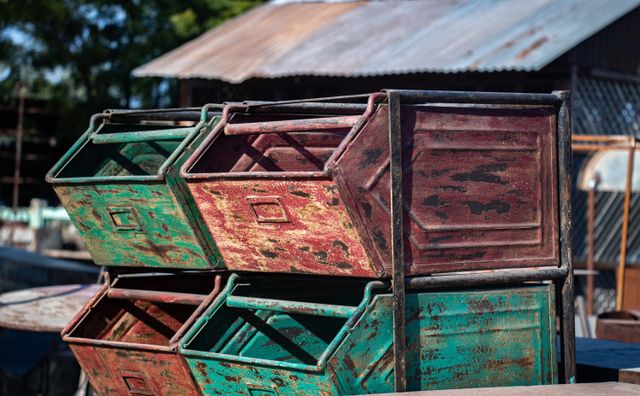

Loose parts scattered across a production floor, scrap material with nowhere to go, or heavy components that keep damaging whatever container they’re put in. Metal bins solve these problems consistently in some of the most demanding industrial environments.
Here’s a breakdown of what distinguishes metal bins, where they are used, and what to consider before purchasing.
What Are Metal Bins?
Metal bins are heavy-duty steel storage containers designed to organize, handle, and transport parts, scrap, and bulk materials in industrial settings. Most are made from mild steel, which handles cutting, welding, and heavy loads without compromising structural integrity.
If you’re sourcing durable metal bins for storage and handling, start by deciding on size, wall configuration, and whether you need a rigid or collapsible unit.
Benefits of Metal Bins
Compared to plastic containers or cardboard alternatives, metal bins hold clear advantages in demanding environments:
- Durability: Steel construction handles rough handling, sharp objects, and harsh conditions that would damage plastic or corrugated containers. Well-maintained steel tubs can last 20 years or more.
- Load capacity: Metal bins handle heavy, dense materials that would exceed lighter containers’ limits.
- Reusability: Steel bins can be repainted or powder-coated to extend their working life, making them a cost-effective long-term investment.
- Versatility: Available in rigid and collapsible versions, with solid or vented walls, drop doors, and parts-chute configurations depending on the application.
Where Metal Bins Get Used
Manufacturing and Automotive
Manufacturing plants use metal bins to stage raw materials, collect scrap, and move parts between production stages.
The automotive industry relies on them for heavy components like motor housings and suspension assemblies, where sharp edges and dense loads make plastic containers a poor choice.
Warehousing and Distribution
Distribution centers and warehouses use metal bins to organize inventory, consolidate parts, and move materials efficiently through the facility. Their stackability helps maximize available floor and vertical space.
Recycling and Waste Management
Recycling operations use metal bins to sort and contain scrap material before processing. Their drop-door and parts-chute configurations can make loading and unloading straightforward in high-throughput environments.
Other Industries
Metal bins also appear in construction, agriculture, food processing, pharmaceuticals, and logistics operations where a durable, reusable container is needed for heavy or irregular materials.
How to Choose the Right Size
Metal bins range from 24×24 inches on the smaller end up to 96×48 inches for heavy-duty and foundry applications.
Choosing the right size generally comes down to the density and volume of what you’re storing: smaller bins suit denser, heavier components, while larger footprints work better for lower-density bulk materials that need more space.
Common sizes and their typical applications:
- 36x32x36: General industrial parts and automotive components
- 48x32x30: Flat or wide parts, assembly line storage
- 62x48x36: High-volume manufacturing and bulk storage
Custom builds are also available for operations that need a specific footprint, wall type, or entry configuration that standard sizes don’t cover.
New vs. Used Metal Bins
New metal bins arrive with no prior wear and can be specified to exact requirements, including wall type, entry configuration, and coating. Used bins are a cost-effective option when structural integrity matters more than cosmetic condition. Inspect for weld cracks, significant rust, and damaged entry points before purchasing used stock.
For many industrial applications, a structurally sound used bin can deliver dependable performance at a lower price.
Where to Source Metal Bins
Metal bins are a long-term investment, so choosing the right size, configuration, and condition from the start helps them stay cost-effective over time.
Container Exchanger is an online marketplace for new and used industrial containers, including metal bins in a wide range of sizes and configurations from sellers across North America.
Custom builds are also available for specific requirements. Confirm dimensions, wall type, condition, and any feature details for each listing before purchasing.