
In markets increasingly saturated with products that look and perform much the same, introducing a distinctive product line can become an important growth strategy. It can help a business attract attention, defend its position and give customers a clearer reason to choose its offer over standard alternatives. The sanitary ware and bathroom fixture industry is no exception.
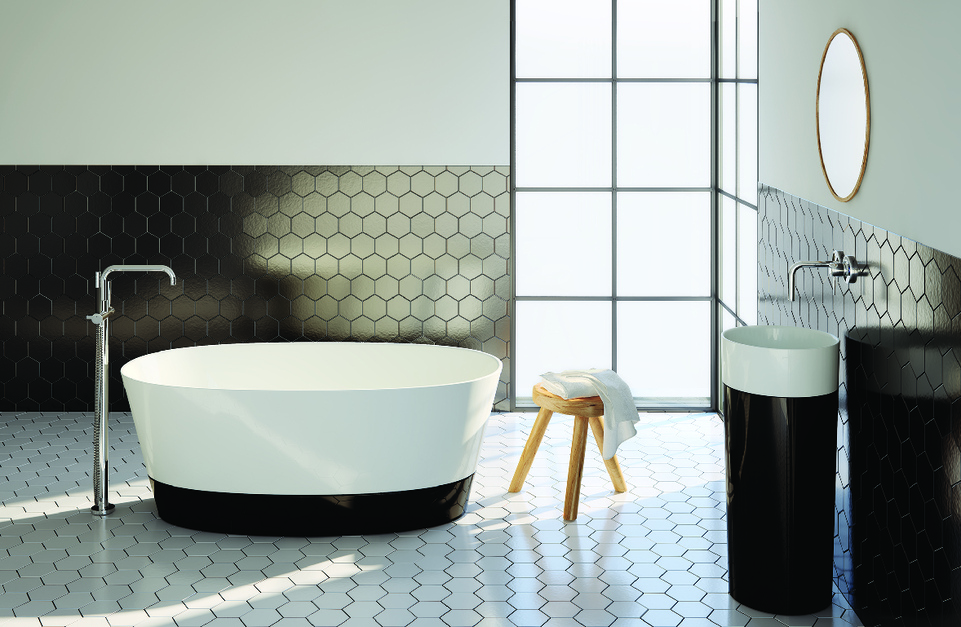
Brands, retailers and distributors increasingly recognise that adding more of the same is unlikely to strengthen their market position. A distinctive bathtub, washbasin or shower tray range can generate additional revenue, improve sellability and help build a more recognisable brand.
Developing such products in-house, however, requires designers, engineers, tooling expertise, production space and specialist staff. For many businesses, that is neither practical nor commercially sensible.
Fortunately, contract manufacturing provides another route. In this article, we examine the main cooperation models available, their respective strengths and the circumstances in which each may be the best strategic choice.
Choose the cooperation model that matches your objective
Four common models are available to businesses seeking a new sanitary ware range.
Private label is usually the quickest option. The buyer selects products already developed by the manufacturer and sells them under its own brand. This reduces development time and risk, although the design may also be available to other customers.
ODM offers a middle ground. The buyer begins with an existing manufacturer-owned design but adapts elements such as dimensions, finishes, colours or technical details. This can create greater distinction without requiring an entirely new product.
OEM is suitable when the business already owns the design or technical specification. The manufacturer provides the production capability, tooling knowledge and quality processes needed to turn that documentation into a finished product.
Custom product development offers the greatest opportunity for differentiation. The process begins with a commercial idea or design direction, which the manufacturer helps convert into a technically viable product. It can create a genuinely distinctive collection, but normally requires more time, development work and investment.
A retailer filling a portfolio gap quickly may therefore favour private label. A brand seeking moderate exclusivity may choose ODM. A company with an established design team may need OEM, while a business building its identity around original products may benefit most from custom development.
Select a partner capable of supporting the strategy
The first question should be whether the supplier’s capabilities suit the intended market position.
An upscale range needs more than an unusual shape. Look for evidence of in-house design, engineering and tooling capabilities, together with expertise in materials that offer something beyond standard products. This might include a refined finish, repairability, better heat retention, distinctive forms or greater durability.
B2B specialisation also matters. A manufacturer serving mainly individual consumers may not be organised around samples, technical documentation, repeat orders, branded packaging, collection development and sales support. A dedicated B2B partner is more likely to understand the commercial process surrounding the product.
Quality systems and certification provide another useful signal. Formal quality-management procedures, laboratory testing and recognised certificates suggest that the supplier has established processes. They do not however guarantee perfect products, so buyers should still ask what is tested, how production is inspected and how claims are resolved.
Finally, examine the commercial terms. High minimum order quantities can make an untested launch unnecessarily risky. Smaller opening orders allow the buyer to test demand before committing more capital. Samples, realistic lead times, flexible cooperation models and product training can also make the new range easier to introduce and sell.
Selected top bathroom fixture contract manufacturers
The following examples show how different suppliers can suit very different strategic needs.
Marmorin: premium, design-led product development
Marmorin is a Polish manufacturer focused entirely on B2B customers. It produces composite washbasins, bathtubs and shower trays, as well as quartz-composite kitchen sinks.
Its main strength is the breadth of its cooperation options. Businesses can choose from more than 150 existing designs, adapt them through ODM, provide their own specifications for OEM production or develop an original product with Marmorin’s in-house team.
This makes the company a strong fit for brands, retailers and distributors seeking an upscale collection with distinctive forms, smooth finishes and material-based sales benefits. Its flexible model allows a customer to begin with private label and move towards more exclusive products later.
Marmorin’s website also includes a detailed guide covering the wider factors businesses should consider when sourcing bathroom fixtures and kitchen sinks.
Trojan Baths: established white-label acrylic ranges
Trojan Baths is a British manufacturer of acrylic baths and gelcoat stone-resin shower trays. It mainly serves wholesalers, distributors, merchants and brands seeking established products rather than fully bespoke collections.
Its white-label model allows buyers to select products from the existing range and agree specifications, branding and presentation. Options include rectangular, freestanding, shower and specialist baths.
Trojan suits businesses seeking dependable products at accessible price points. UK production may also simplify communication and replenishment. Founded in 1975, the company states that it can produce up to 8,000 baths per week on a single shift.
Nordic Bath: complete private-label bathroom concepts
Nordic Bath is a Scandinavian B2B white-label bathroom concept and supply-chain partner. It helps retailers, specialist chains and sanitary wholesalers create coordinated ranges covering furniture, toilets, basins, showers, mixers, mirrors and accessories.
Support can include product selection, design, manufacturing coordination, quality control, packaging and logistics. Nordic Bath is therefore a strong option when the objective is not to source one standout fixture, but to build an entire branded bathroom collection through one partner.
Choose the route that creates meaningful differentiation
A unique product line does not always require starting from a blank sheet. Private label can provide speed, ODM can add distinction, OEM can turn an existing design into reality, and custom development can create the strongest exclusivity.
The right decision begins with the intended customer and market position. Once those are clear, businesses can choose the cooperation model and manufacturing partner capable of delivering a product range that is not only different, but commercially valuable.