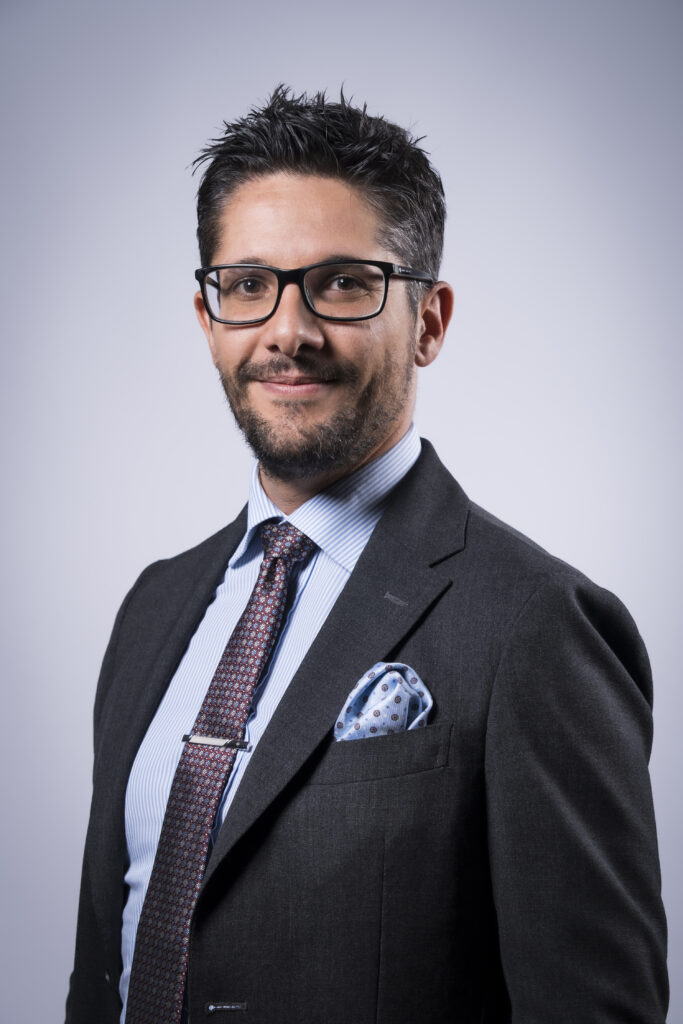
In a sector increasingly shaped by internationalisation, regulatory complexity, and agile competition, Finarte stands out as a leading Italian auction house with a rich legacy and a forward-looking strategy. At its heart is Chief Financial Officer Alessandro Consoli, guiding the company with clarity, discipline, and a sharp focus on long-term resilience. Following Alessandro’s recent successes in the Global CFO Excellence Awards, we caught up with the driving force behind Finarte’s financial strategy to learn more about the journey, the mindset, and the milestones that have defined his path to success.
Founded in 1959 by the Milanese banker Gian Marco Manusardi and later acquired by a new group of investor-shareholders with the vision of creating an auction house that was “by collectors for collectors,” Finarte is a company that has written the history of the Italian art market. Over the decades, the company has grown steadily, broadening its scope and building an increasingly diversified offering. Today, Finarte stands as a leading player in the artistic and collecting landscape with 21 departments, 70 auctions held annually, and ongoing expansion into the luxury, art, and design sectors.
The company serves a highly diverse clientele, from private collectors to enthusiast, foundations to galleries, and clients active in the world of luxury and fine craftsmanship. Alongside this network are the professionals who contribute to the creation of the auction product, comprising photographers, graphic designers, experts, consultants, printers, and many other specialised suppliers who, behind the scenes, ensure a high quality result, meticulously curated to the smallest detail.
Finarte is a multifaceted group composed of three companies, operating in the auction world with a unique, cross-sector vision: from luxury – jewellery, watches, and fashion – to art and photography; from wine, books, comics, and design to antique arms and militaria. It operates within a diverse and constantly evolving universe, one that requires the ability to navigate across very different, internationally oriented markets.
In such a complex environment, characterised by increasingly strict regulatory constraints and profound structural changes, it became necessary for Finarte to undergo a true cultural transformation: moving away from the traditional family-run business model to embrace a more managerial, solid, and structured approach.
Leading this transition required a complete redesign of central functions to build a broad, integrated system. Alongside the traditional areas of accounting, administration, IT, and HR, new strategic functions were introduced: legal and organisational, to establish clear procedures; finance and treasury, focused on cash flow and forward-looking projections; planning and control, to support agile decision-making; commercial planning, driven by data and performance forecasting; procurement, to monitor spending and negotiate commitments; and anti-money laundering, ensuring regulatory compliance and risk protection.
This journey of transformation was steered by Alessandro Consoli, Finarte’s Chief Financial Officer, whose strategic vision and operational leadership have been instrumental in reshaping the company’s internal architecture. Today, Alessandro oversees the Group’s core functions – ranging from administration, finance, and compliance to ICT infrastructure, HR, and procurement – ensuring that every area operates with precision, agility, and alignment to broader business goals.
A key part of Alessandro’s role at Finarte involves supporting the CEO in defining both qualitative and quantitative objectives, setting the Group’s general policies in human resources development and management, designing and evolving organisational models aimed at enhancing effectiveness and efficiency, defining corporate strategies and objectives, and optimising cost structures through targeted planning and investment.
Over the course of his career, Alessandro has taken on a variety of responsibilities that have shaped both his professional and personal growth. Yet it was his accumulated experience within the AFC area that proved most instrumental in preparing him for the CFO role. Early positions in accounting – first at a tax consultancy firm, then at a major telecommunications company – provided a solid foundation in financial reporting. Later, as a controller in two banking startups, Alessandro developed a strategic mindset, learning to support decisions with reliable data and forward-looking analysis.
Working in the banking sector from the very startup phase was particularly formative. There, Alessandro learned that no barrier is insurmountable, only challenges to be met with the right mindset. In such a dynamic and uncertain environment, Alessandro strengthened his flexibility, learned to reassess priorities, and maintained long-term focus until ideas became tangible results. Starting out as an intern, he also learned humility: the importance of staying open to learning, even at the highest levels. Determination and patience became the cornerstones of his approach, shaping a leadership style rooted in perseverance.
“These steps naturally led me to my current position as CFO,” he told us, “where I draw daily on what I learned in the past: the precision of accounting, the ability to read and interpret numbers, the skill to translate financial data into actionable guidelines for business growth, and the capacity to constantly simulate future scenarios in order to anticipate key variables. My professional journey has allowed me to grow not only from a technical standpoint, but also in the development of soft skills that I now consider fundamental for a CFO.”
Today, Alessandro operates with a leadership style built upon two main pillars: clarity in communication and sharing of vision. He believes that a leader should not simply give instructions but rather create an environment where everyone understands the bigger picture, the reasoning behind decisions, and how their individual contribution impacts the organisation’s objectives. To Alessandro, it is essential that each person feels part of a single organism, with both the power and the responsibility to help improve the direction and the speed at with Finarte moves.
To ensure that everyone moves in the same direction, Alessandro dedicates time to communicating transparency, explaining both strategic priorities and the rationale behind each decision. He reinforces this communication through continuous alignment tools, including regular meetings, shared reports, and open discussions that allow every team member to see how their work connects to overall goals. Another key element of Alessandro’s approach is refusing to accept “no” as an answer. He leads his team with the steadfast belief that any problem or initiative, if addressed and analysed correctly, can be achieved or resolved.
Central to Alessandro’s leadership is an absolute intolerance for downtime and poor performance. While some may view it as rigid, Alessandro considers a meritocratic system essential in such a fast-paced environment – where his team must move quickly and deliver concrete results. In this environment, only those who achieve their objectives are rewarded, not only with monetary recognition but also with greater organisational involvement, increasing responsibilities, and participation in strategic projects. To sum up this approach, Alessandro stated: “With me, you work hard, but you learn and grow even more.”
To sustain this model, Alessandro pairs work activities with moments dedicated to personal and team development, which he calls “moments for group culture.” In these sessions, participants are guided by pre-defined themes and can exchange ideas, create synergies, and strengthen cohesion. In the long-term, this approach plays a crucial role in building a consolidated and autonomous team, one ready to handle growing responsibilities and enables delegation to be truly effective.
“Creating a meritocratic environment has encouraged my colleagues not to limit themselves in their daily tasks, but constantly seek out new opportunities, projects, and improvements,” Alessandro shared, “in the knowledge that every significant result will bring tangible and motivating recognition. I also make it a priority to minimise inefficiencies in interactions and cross-team organisation, avoiding both downtime and boredom. To this end, I regularly assign projects to my department by structuring them into small, cross-functional mini-teams, ensuring they remain as flexible as possible, avoid routine fatigue, and have continuous opportunities to challenge and develop themselves.”
Alessandro’s strategic approach to leadership has enabled Finarte to thrive in the auction house sector, a shifting landscape that is increasingly adopting an international outlook enriched by lean and dynamic players, within an ever more complex regulatory framework. In this transformatory phase, the greatest challenges are being presented to long-established companies, who must now rethink management approaches and move towards a more structured, managerial model.
In this scenario, Alessandro’s role as CFO becomes crucial; to ensure competitiveness in a more agile and flexible market, it is essential to build a structured organisation that can simultaneously preserve agility and speed in decision-making. In Finarte’s case, the team worked on two main fronts: analysing and redesigning processes to identify waste and inefficiencies; and reviewing costs line-by-line, eliminating duplications and renegotiating contracts and suppliers to achieve significant savings.
At the same time, the team adapted Finarte to the new regulatory environment, placing a particular focus on anti-money laundering. The entire process was redesigned, defining new roles and structures, in order to protect the commercial network without stifling the business. This forward-thinking approach made it possible for Finarte to avoid risks related to dealing with non-compliant parties, which would have represented more of a threat than an opportunity in the longer-term.
Of course, revisiting established processes and structures that employees are attached to is never a simple task; resistance is common, and it can be easy to fall into organisational entropy. In these cases, communication becomes an indispensable tool. Alessandro asserts that the CFO must clearly articulate the benefits of change and build genuine buy-in across the team. Yet, he told us, communication alone is not enough; leadership and charisma are equally vital to steer the team in the right direction and keep energy focused on shared goals.
Looking ahead, Alessandro’s vision for the future is rooted in building increasingly solid foundations – both for Finarte and for his own leadership. His focus lies in strengthening what has already been built: consolidating processes, tools, and internal competencies so they become stable, shared assets. At the same time, he is committed to developing new opportunities for growth, both strategically and personally.
For the company, this means continuing to evolve a managerial structure that is agile yet robust, capable of anticipating market shifts, enhancing regulatory oversight, and driving innovation through sustainable business models and improved financial planning. On a personal level, Alessandro aims to cultivate a leadership style that places people at the centre, investing in their development and building autonomous teams. He believes that true success lies not only in financial results, but in leaving the organisation stronger than it was before.
“In short, he said, “my project for the future is to transform today’s success into a stable, innovative, and long-term model, ensuring that what we are building now becomes the foundation for tomorrow’s achievements.”
There is no universal formula to becoming a CFO – a fact that Alessandro places great emphasis on. Instead, he promotes the importance of building solid technical foundations – mastering accounting, having a deep understanding of taxation, and navigating management control with confidence. These are skills that require constant updating, which is why a CFO must be driven by relentless curiosity and a commitment to continuous learning and improvement.
This role is one that demands complete focus and dedication, with no limits on time or energy when it comes to achieving a goal. It is a role that evolves everyday because today’s CFO, he believes, must go beyond technical rigour to embrace an increasingly strong strategic dimension. A CFO today is not only a custodian of numbers, but also someone who can read the industry, interpret its signals, and transform them into decisions that shape the future of their company.
To those pursuing this path, Alessandro offered clear advice: “Study, study, and study. Never stop questioning yourself and striving to improve. And then, work, work, and work with genuine passion – because only by loving what you do will you stop seeing time and effort as a sacrifice and instead recognise them as a precious resource that enriches you and keeps moving you forward. Stay curious and never fully satisfied, because it is only with this mindset that you will keep improving and growing.”
Contact Details
Contact: Alessandro Consoli
Company: Finarte s.p.a.
Web Address: www.finarte.it