
When speaking of efficiency, the discussion among IT administrators often revolves around software and digital systems platforms, automation, network speed and performance. Fair enough; digital infrastructure has proven highly beneficial to productivity over the last decade.
However, in recent times, there has been a growing realisation that software alone is not a key indicator of efficient performance in the workplace. The physical environment matters as well, including workstation setup, equipment storage and organisation, and accessibility of necessary tools.
The Multi-device Reality of the Modern Workplace
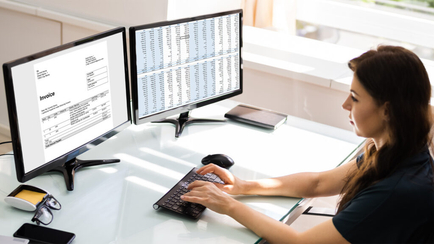
The modern office employee does not simply sit down at a desk and operate one computer. IT specialists need to control various servers, test systems, and environments. Software developers must switch between local and remote machines throughout the day. Security teams work with several screens, monitoring multiple systems at once. Production studios use different hardware at each step of workflow development.
The list goes on and on. And while it may sound like a great thing, it creates serious physical challenges. Each device requires its own keyboard, display, and mouse. The result is additional hardware that complicates operations and takes precious time to manage.
Many businesses including a growing number of Australian IT teams simplify multi-system workflows using KVM switches. These devices allow users to control multiple computers from a single keyboard, mouse, and monitor setup, helping reduce desk clutter and improve operational efficiency. They are commonly used in offices, data centres, security monitoring environments, and development workflows where teams need to switch between multiple systems quickly and efficiently.
Disorganisation You Won’t Notice Until It’s Too Late
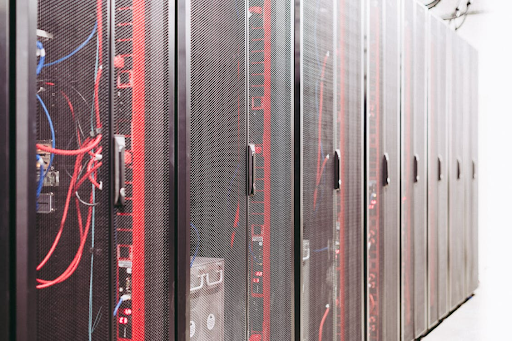
When speaking of infrastructure and efficiency, technological investments come first to mind. However, there is another factor that may significantly influence your business but stays unnoticed until things go wrong: physical disorganisation in stockrooms, warehouse areas, server rooms, and similar spaces. And while it is not easy to measure this kind of inefficiency, it does exist.
Unorganised inventory takes time and effort to manage. Imagine a worker spending three minutes searching for a component that should take seconds to find. Equipment is also frequently damaged due to poor storage conditions. And disorganised spaces create additional safety risks while decreasing overall floor usage meaning the business pays more for its operations than necessary.
This is why heavy-duty shelving solutions have been growing in popularity across global markets, including Australia. The principle is simple: organised spaces save time and effort while increasing safety and optimising the floor plan of any workspace.
Two Solutions, One Key Idea
Although shelving and KVM switches seem to belong to different worlds, the core idea behind them is the same, removing all sources of friction. Every time an employee has to hunt for a peripheral, manually switch screens, or spend time locating something in a stockroom, the result is wasted effort. Multiply such friction points across several people in a company, and the total inefficiency becomes very noticeable.
Efficient infrastructure is not about large, sweeping decisions or massive capital investments. It is about small, deliberate actions that compound over time. Businesses that get this right can deliver consistent, high-quality results regardless of external pressures and that holds true in any market.
SMEs as Leaders in Infrastructure Management
Infrastructure-related challenges often receive less attention from business leaders compared to bigger priorities of the moment. However, small and medium-sized businesses (SMEs) whether in Australia or globally stand to benefit enormously from addressing this area.
Consider a five-person IT team controlling multiple servers. Such employees cannot afford to waste time on peripheral management while juggling several computers at once. Similarly, a small warehouse operating near capacity cannot afford inefficiency in how it uses space and stores inventory. For hybrid businesses managing both software and hardware environments, the priority is even more obvious.
The fact is that SMEs often gain a greater return from infrastructure investment than larger organisations in similar situations. The upfront cost is relatively low, and the payoff comes sooner precisely because resources are limited and every efficiency gain matters.
Infrastructure as a Strategic Factor
Proper infrastructure also serves as a strategic tool for companies operating in competitive markets. In logistics, managing a warehouse efficiently and organising storage properly is a direct competitive advantage. In IT services, fast and accurate transitions between systems translate to better outcomes for clients. Any business with overlapping layers of operations needs to manage them with the right physical infrastructure in place.
Australian businesses, in particular, have begun treating infrastructure as a strategic variable given the competitive pressures of both domestic and export markets. But this mindset is equally applicable to businesses in any region: if your working environment accumulates inefficiency, further growth becomes increasingly difficult.
Get the Basics Right
Of course, there is no shortage of technological innovations promising to transform business performance automated systems, predictive analytics, machine learning, and beyond. Nevertheless, sometimes the most impactful solution lies in the basics.
Start with your physical hardware infrastructure. KVM switches will help your employees handle multi-device environments quickly and efficiently. Heavy-duty shelving will allow you to manage your warehouse and storage spaces without difficulty. These foundational measures will pay off sooner than you might expect in Australia and anywhere else in the world.
The businesses that tend to perform most consistently over time are rarely those that chased the biggest technology investment. They are the ones that got the fundamentals right first and built everything else on top of a working foundation. Infrastructure is not a glamorous priority, but it is a durable one. Whether you are managing a server room in Sydney, a warehouse in Singapore, or a hybrid operation across multiple sites, the principle holds: a well-organised, well-equipped working environment reduces friction, supports your people, and creates the conditions for everything else to function as intended. That is a return worth investing in.