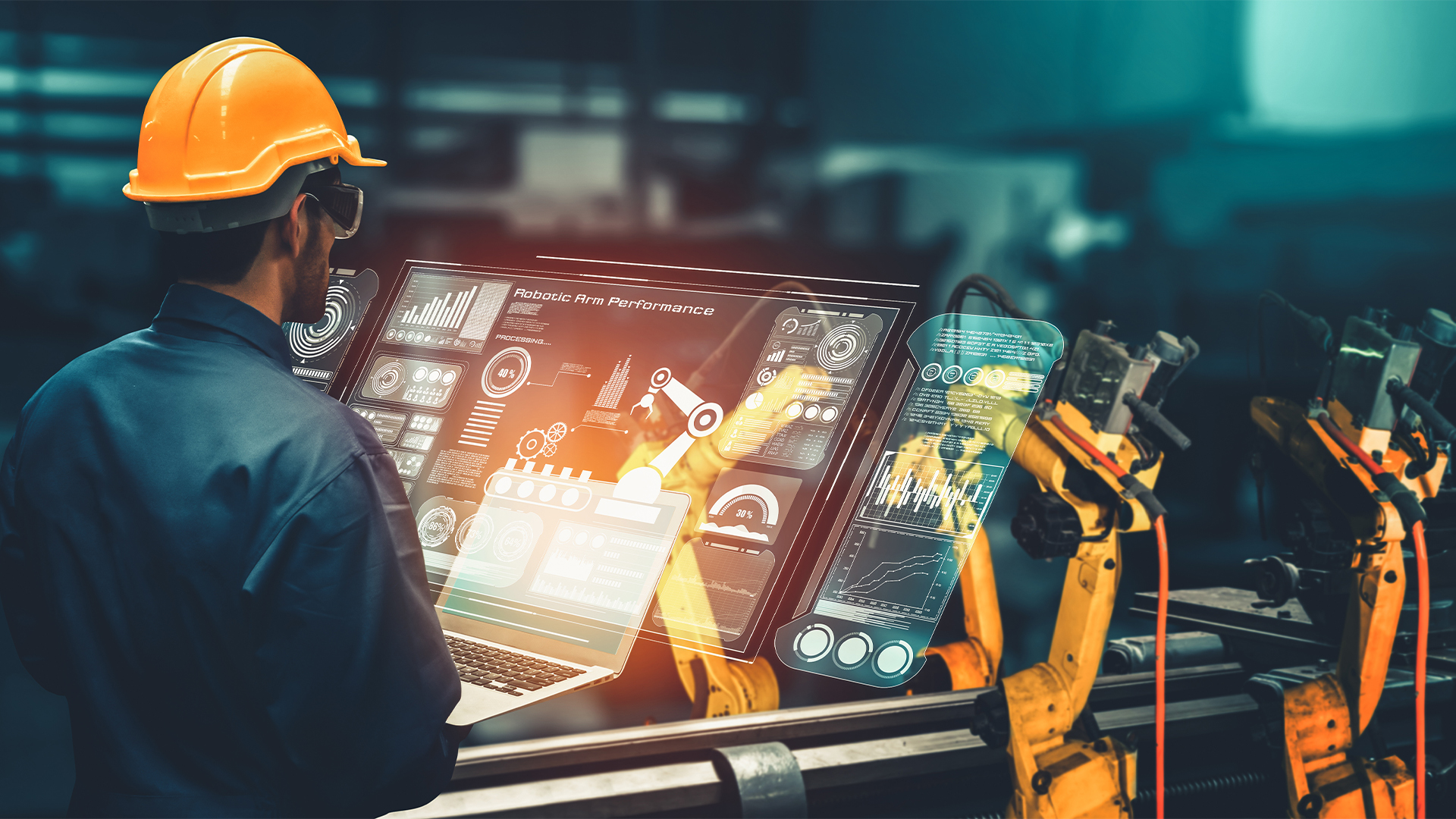
Operations directors, EHS managers, and facility leaders in traditional industrial environments are running into the same wall: the impact of outdated industrial technology makes everyday decisions slower, riskier, and harder to standardize. When information lives in disconnected systems and manual routines, operational inefficiency in manufacturing becomes the default, delays compound, maintenance turns reactive, and quality issues stay hidden until they’re costly. At the same time, persistent workplace safety hazards can go underreported or unmanaged because visibility is limited where it matters most: on the floor, in real time. The result is a familiar set of industrial workspace modernization challenges that stall improvements and leave teams stuck defending legacy processes.
Quick Summary: Smart Tech in Safer, Leaner Plants
- Use IoT sensors to monitor equipment and conditions in real time, improving visibility and faster response.
- Use wearables to enhance worker safety through timely alerts and better situational awareness.
- Use automation systems to streamline repetitive tasks, boosting throughput and operational consistency.
- Use advanced safety solutions to reduce risk exposure and support safer, more efficient industrial workflows.
Understanding the Smart Tech Stack in Facilities
In practical terms, smart industrial safety and efficiency come from a connected stack. IoT sensors track equipment health and environmental conditions, wearables add worker context, automation acts on rules, and machine vision checks what “looks right” on the line. Edge computing ties it together by processing data near the machines, so alerts and inspection decisions happen fast and keep working during network hiccups.
This matters because safety signals lose value when they arrive late. Reliable real-time processing can reduce unplanned downtime, prevent quality escapes, and help teams respond before small issues become incidents. The scale of opportunity shows up in the USD 17.5 billion IoT sensors market.
Picture a packaging area: a camera flags a missing label, a conveyor slows automatically, and a supervisor gets a wearable alert. An edge device confirms the defect on-site, while trends sync later to the cloud.
Smart Tech Options at a Glance
This comparison helps you choose smart technology solutions based on the outcome you want first: fewer incidents, faster throughput, higher uptime, or more consistent quality. Looking at benefits alongside constraints keeps ROI realistic and reduces the risk of adding complexity that operators will not trust or use.
| Option | Benefit | Best For | Consideration |
| IoT condition monitoring | Predicts failures and optimizes maintenance timing. | Critical assets with costly downtime. | Needs sensor standards, calibration, and data governance. |
| Wearables and proximity safety | Improves hazard awareness with real time worker context. | Forklift zones, confined areas, lone work. | Privacy, ergonomics, and alert fatigue require careful design. |
| Machine vision inspection | Catches defects and unsafe states consistently at speed. | Packaging, labeling, assembly verification. | Lighting, camera placement, and edge tuning drive accuracy. |
| PLC and robotics automation | Boosts throughput and repeatability for stable processes. | High volume, repetitive, well defined tasks. | Higher integration effort and change management for roles. |
| Edge analytics and AI inference | Delivers fast decisions even with weak connectivity. | Latency sensitive alarms and on line QA. | Requires rugged compute, lifecycle updates, and security controls. |
If you need the quickest payback, start where failures are frequent and data is easy to capture, then layer automation once signals are reliable. Growth signals like the USD $449.77 billion by 2032 outlook also suggest that integration skill is becoming a core capability, not a nice to have. Knowing which option fits best makes your next move clear.
Implement Smart Modernization in 7 Steps—Including Edge Machine Vision
Smart modernization works best when you treat it like an operations program, not a one-off tech purchase. Use the steps below to move from “interesting options” to a deployment that improves safety, throughput, and ROI.
- Pinpoint bottlenecks and compliance risks first: Walk the line with operations, EHS, and maintenance to identify 2–3 constraints that show up every shift, near-misses at a pinch point, recurring downtime on one cell, or quality escapes tied to a manual check. Translate each into a measurable target (e.g., reduce unplanned stops by 20%, verify PPE compliance at entry points) so you can match the right option from your tech shortlist to the highest-value problem.
- Build the business case with a phased, ROI-led budget: Start with one “lighthouse” use case that proves value in 60–90 days, then scale to adjacent lines once you’ve validated performance and change management. A budget grounded in an ROI-focused budget keeps priorities aligned with outcomes like OEE, scrap, and recordable incident reduction, not just feature sets.
- Map your data and integration needs before you specify hardware: Inventory what you already have (PLC brands, SCADA/MES, historians, camera feeds, Wi‑Fi/5G coverage, cybersecurity requirements) and document the “hand-off” points where new systems must connect. A short workshop to evaluate infrastructure typically reveals whether you need protocol translation, additional sensors, time synchronization, or data retention policies for audits.
- Design machine vision from the scene outward: Define what “good” looks like in images, defect size, allowable variance, speed of the conveyor, lighting conditions, and acceptable false rejects. Choose camera placement and lighting first, then decide whether classical vision rules are enough or if you need AI for variability (mixed SKUs, messy backgrounds, reflective surfaces). This prevents overbuilding computers for a problem that could be solved with better optics and illumination.
- Specify rugged edge computing requirements for the plant floor: For vision at the edge, document environmental needs such as temperature range, vibration/shock tolerance, dust/oil exposure, and enclosure/IP rating. Add operational requirements: 24/7 uptime, remote management, secure boot, and enough I/O (PoE/GigE for cameras, USB, digital I/O) to fit your cell design. This is where “industrial grade” matters, consumer PCs often fail on thermals, connectors, and serviceability.
- Match AI acceleration to your latency and throughput targets: AI accelerators in manufacturing are most valuable when you need real-time decisions, reject a part, stop a machine, or guide a robot, without cloud round-trips. Estimate required FPS per camera and the maximum allowed decision latency, then size for headroom (often 30–50%) to accommodate model updates and new SKUs. Plan how models will be deployed, versioned, and rolled back so improvements don’t become production risks.
- Validate performance and connect to automation using a proven hardware path: Run a pilot that mirrors production: same speeds, same lighting drift, same operator interactions, and defined acceptance criteria for accuracy, uptime, and response time. For sourcing, use an industrial computing path that’s already common in plants: a rugged edge box PC with expansion options for AI acceleration, supported lifecycle availability, and documented interfaces to existing automation systems, and consider this option for examples of machine-vision-ready configurations.
Turn Smart Modernization Into Safer, Faster Industrial Performance
Industrial leaders face a constant tension: raising throughput and visibility while reducing risk in environments that can’t tolerate downtime. The right response is a disciplined smart technology transformation, start with clear outcomes, build a phased roadmap, and scale only what proves value. Done well, industrial innovation benefits show up quickly as workplace safety improvements and operational efficiency gains that teams can measure and sustain. Modernization works when safety and efficiency are engineered together from day one. Choose one high-impact use case and map the first phase from data capture to validation and integration. That focus builds resilience and positions operations for the future of industrial technologies.