

By Philippe Wetzel, CEO and founder of VITEC.
As video traffic flowing over public internet and corporate information technology (IT) networks explode at exponential rates, the technology community is coming to grips with the environmental implications of this resource-intensive category of traffic.
Here, with Philippe Wetzel, CEO and founder of VITEC, a global technology leader in the IPTV space, we learn more about how video contributes to the global carbon footprint and how we can include ecosystem design and strategies to reduce the environmental impact in a business-savvy and rational manner.
The impact of digital video on sustainability and carbon emissions
The internet contributes more than 3.7% of global greenhouse gas emissions. Within that, video represents over 80% of the traffic that flows through this global network which is growing rapidly at about 25% per year. A similar dynamic is taking place over enterprise networks, especially in the wake of the COVID-19 pandemic. A tremendous amount of video traffic is being managed by IT departments. This is why tracking the impact of digital video consumption across the business ecosystem is becoming increasingly important. Meanwhile, the number of screens consumers use — at home and work — is also multiplying at an astonishing rate. With all these devices, there is an increase in video and encoders to handle the exploding demand for video content, driven by the growth of video-heavy social applications — TikTok and WhatsApp, to name but a few. These factors drive high demand for encoders and decoders. It is in this context that it is important to focus on the details of video technology.
Encoders, for instance, consume significantly more energy than decoders – sometimes as much as 5 to 10 times as much energy, in comparison. In the past, there was an asynchronous relationship between these two categories of technology. Most video content was created — and encoded — by a much smaller percentage of the population compared to those who consumed – and therefore decoded video. Today, the gap between these two groups has narrowed significantly.
User-generated video content for professional and personal purposes has skyrocketed. As a result, we not only have more traffic flowing through public and private networks, but we also have much more original content generation taking place. This is significantly elevating the carbon footprint of the video sector. As a result, industry executives are re-evaluating how to balance sustainability with the ever-growing corporate and consumer demand for video content. This is why we — together as a video streaming community — must take responsible steps to initiate an effort to reduce the carbon footprint on the entire value chain of this industry.
An industry-wide effort is required to reduce energy consumption
Carbon footprint assessment must encompass all direct and indirect emissions within the value chain. This should include everything from the extraction of raw materials, design, manufacturing, transportation, and even the final recycling of the devices. All key players will need to actively participate in reducing energy consumption across their stage of the ecosystem. Optimizing the energy consumption of each key player — and their products — can positively impact the planet. It can also be a good business practice, if done correctly, because it reduces costs for the key players in the long run. This makes it a win-win for everyone involved. In today’s market — across a growing number of geographic regions — environmentally optimized products and services are also more competitive. They reduce the raw material needed for production and consume less electricity upon deployment.
VITEC shares their commitments to sustainability and enlists everyone to join them
VITEC has taken a leadership position in introducing a well-developed methodology, named GreenPEG, to move forward in a sustainable, measurable, and accountable manner. This involves the implementation of a comprehensive strategy made up of five specific Initiatives.
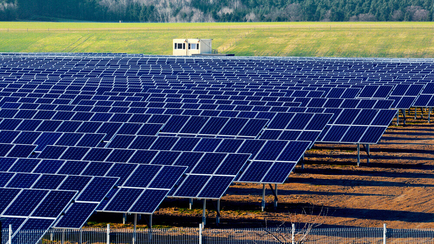
- Modern Facilities. In 2021, VITEC invested in photovoltaic panels and batteries to generate electricity for its manufacturing needs in three separate facilities: 1 in Germany and 2 in the US (California and Georgia). In 2022, they built a facility in France that is up to the latest standards in energy efficiency. In 2023, the company has been working on upgrading their facilities in Scotland to include high-performance heat pumps.
- Streamlining Logistics. In 2022, VITEC moved its U.S. logistics center from the West Coast to the East Coast to consolidate and reduce the surface area of their supply chain. This means fewer trucks have to travel fewer miles to meet logistical needs. By the end of 2023, they plan to achieve a similar outcome in Europe by moving to a single logistics center.
- Embracing energy-efficient design principles. VITEC has integrated eco-friendly requirements into their design control process and architecture. This has had a major impact on hardware and software designs.
- Software, for instance, is responsible for power management. Dynamically switching off — or into sleep mode — all hardware functions when not in use, can significantly reduce the impact on the overall energy consumption of products once they have been deployed into the market. One example is the VITEC SmartLink function for ChannelLink IP Gateways. This feature can monitor video streams and detect if one is no longer being used. When this happens, the IP stream will automatically stop transmitting to save power. This showcases how to embrace energy-efficient design principles and illustrates how intelligent, sustainable software design directly impacts power consumption.
- On the hardware front, VITEC selects the least-consuming components and designs for optimal power. This leads to more compact products, fewer raw materials, and less weight, reducing production and transportation costs.
- Product recycling. Whenever possible, VITEC uses raw materials with the best carbon footprints to ensure that the packaging and components on all products are easily recyclable.
- Implementing real-time energy monitoring and controls. VITEC will begin integrating real-time energy monitoring and reporting on any future products. This will allow customers to assess their products’ overall power consumption and therefore be able to select the best mode for any specific application.
These steps have contributed significantly to VITEC’s ability to minimize its carbon footprint. The rest have been offset by financing United Nations-approved projects.
More, however, needs to be done. It is not enough for a single company to engage in sustainability initiatives. An industry-wide effort is required. That is why VITEC is enlisting their key stakeholders, partner organizations, and even competitors to join them in creating sustainability initiatives across the entire ecosystem. The next step is to help guide the next video compression standard to ensure it is more eco-friendly and fast-enabled. To do so, VITEC assembling a consortium of industrial and academic partners. They want to extend an open invitation to any other organization willing to join them.