


Article written by Alexandr Grygoryev, CEO at Andersen.
Today, in the age of Industry 4.0 and the rapidly unfolding digital transformation, technology is at the core of business growth. It brings value to various aspects of business by enabling informed decisions through advanced analytics relying on curated data, streamlining processes and trimming costs, helping your organization thrive in an economically challenging environment driven by cutthroat competition, and more. Therefore, technology is fundamental to business transformation.
What is business transformation, in essence? This process necessitates disruptive modifications to habitual workflows and practices and enables the shift to digital operating strategies. The goal is increased revenues and flexibility in adapting to changing markets, evolving consumer demands, and economic turmoils. The key elements are organizational, cultural, and digital transformation. This article will focus on the latter, exploring how leading-edge technology impacts business development.
What does it mean to digitally transform a business?
There are many definitions of digital transformation that narrow down to the organization-wide adoption of technology. Its key characteristic is the reliance on data, when strategies and operations are guided by data-driven analytics. The driving force behind this process is the continuous deployment of technology at scale.
The principal components of digital transformation are people—i.e., consumers, clients, and employees—data, insights driven from this data, action taken based on the insights, and the outcomes. Furthermore, technology adoption aims to reorganize and critically improve at least one of the areas within an organization: business and operating models, organizational workflows, products, the employee experience, or the customer experience.
Nearly all organizations (95%) have implemented two or more transformation initiatives over the past three years. Approximately 90% of businesses are engaged in digital transformation efforts, and 80% claim these changes are part of their long-term goals. Furthermore, over the next three years, 96% of C-level executives will allocate 5% or more of the company revenue to transformation projects.
These soaring figures come as no surprise, as the perks that digital transformation offers generously reward the efforts. Pursuing a competitive edge drives digitalization in 82% of companies. According to a survey by CorporateLeaders and PTC, other pros include improved operational efficiency for 40% of companies, accelerated product launch for 36%, and enhanced customer experience for 35%. Baker McKenzie gives their list of compelling benefits, which are strengthened digital and IT security (87%), trimmed costs and boosted efficiency (74%), and streamlined operations (58%).
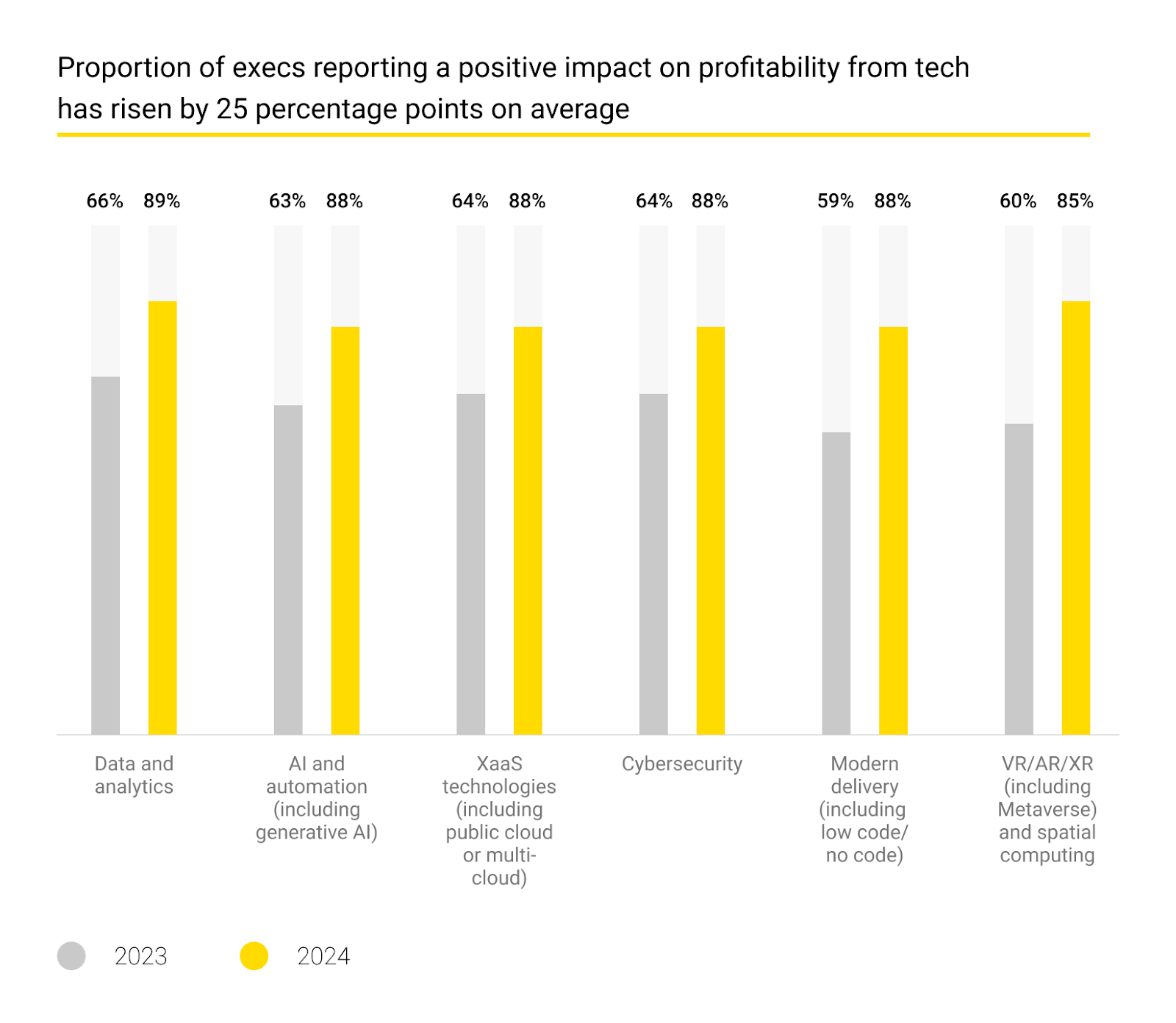
The next section will explore how businesses can achieve these impressive outcomes through technology.
How technology drives business change
We all know the loud success stories of digital transformation from the late 2000s and early 2010s. Back then, giants like Uber, Airbnb, and Netflix revamped their operations and entire industries through mobile technology, cloud-based platforms, and content personalization.
We’ve analyzed how advanced technology changes and enhances key areas within organizations. Below, we present the results of this analysis.
Business and operating models
Sometimes, companies completely revamp their approaches to delivering products and services. For instance, Netflix once transitioned from habitual DVD rental to streaming, while Uber reinvented taxi services by using GPS navigation and mobile app software.
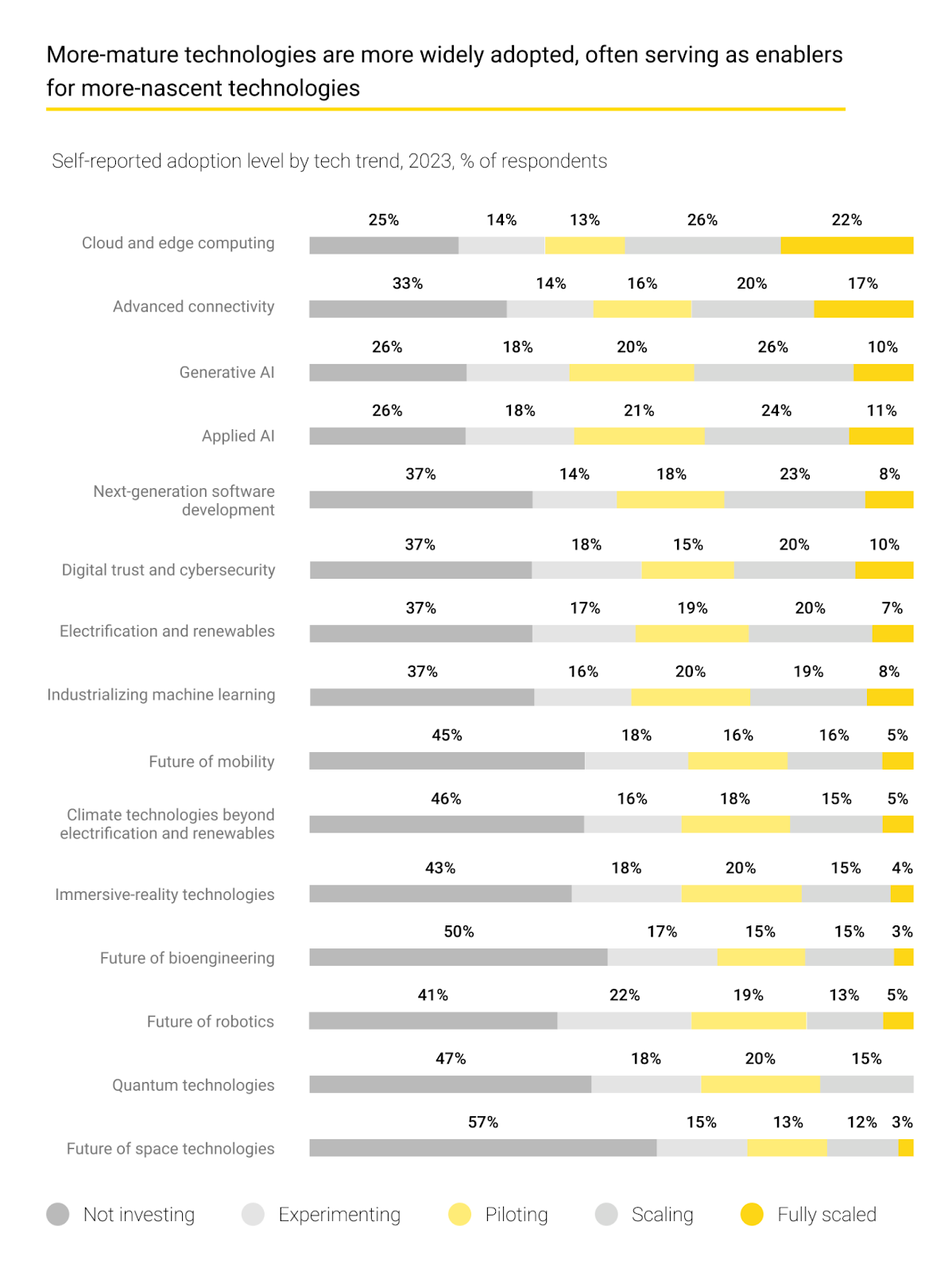
By implementing AI-fueled chatbots, feature-rich mobile apps, cloud platforms, digitization, and blockchain, organizations can scale up, create new revenue streams through upselling, cross-selling, and broadening their audiences, cater to evolving consumer demands, and more.
An in-demand way of transforming an organization’s business and operating model is moving its infrastructure to the cloud, often combining public and private cloud capabilities. Digitization has notably transformed the public sector and healthcare with the transition to electronic records. The Internet of Things disrupts the way logistics and transportation companies, e-commerce enterprises, and construction businesses operate by enhancing fleet, warehouse, and building management. Blockchain takes financial and insurance services to a new level by ensuring secure and transparent transactions. This list of technologies can go on; however, we’ve mentioned the most popular ones.
Organizational workflows
This refers to optimizing a process or processes within an enterprise, for instance, by automating them or introducing advanced analytics.
Thus, robotic process automation accelerates mundane jobs in manufacturing, finance, etc. The DevOps and DevSecOps methodologies and tools streamline software product delivery and enhance cybersecurity in the automotive and consumer electronics industries. Similarly, many automotive repair businesses are adopting technologies that do more than just manage paperwork. A modern auto repair shop management system, for example, automates scheduling, invoicing, and inventory, significantly improving overall operational efficiency. Digital twins have been used in manufacturing, aerospace, construction, and facility management for planning, simulating production lines, predicting equipment failure, and more.
Products
Enhancing company offerings through technology is another popular area of digital transformation. For example, car makers introduce features such as mobile phone integrations with infotainment dashboards, AI-powered voice controls, over-the-air software updates, and AI-controlled ADAS, all to provide personalized and streamlined driving experiences. Another popular example is mobile banking super apps such as WeChat that bring financial services and lifestyle features together within a single digital ecosystem by leveraging third-party API integrations.
Employee experience
Technology both helps organizations manage their staff effectively and empowers specialists with the tools to increase the quality of their work and leisure activities. Various messaging, collaboration, and learning platforms come in handy here, from Microsoft Teams to Slack, enabling remote work and well-coordinated teamwork. Some companies build dedicated platforms for in-house use, for example, to offer discounts to employees. Companies also embed AI into their recruiting and messaging platforms to expedite the interviewing and onboarding process, reduce expenses, and automate reporting.
Customer experience
From first touchpoints to post-purchase reviews, consumer interactions with a brand can be significantly refined and upgraded through digital solutions. Chatbots and voice assistants, AI-fueled personalization features, CRM platforms embedded with AI agents, advanced analytics tools, shopping and gaming apps equipped with augmented and virtual reality, and other technologies enable clients to enjoy products and services interactively, round the clock, from any place, and on their preferred devices.
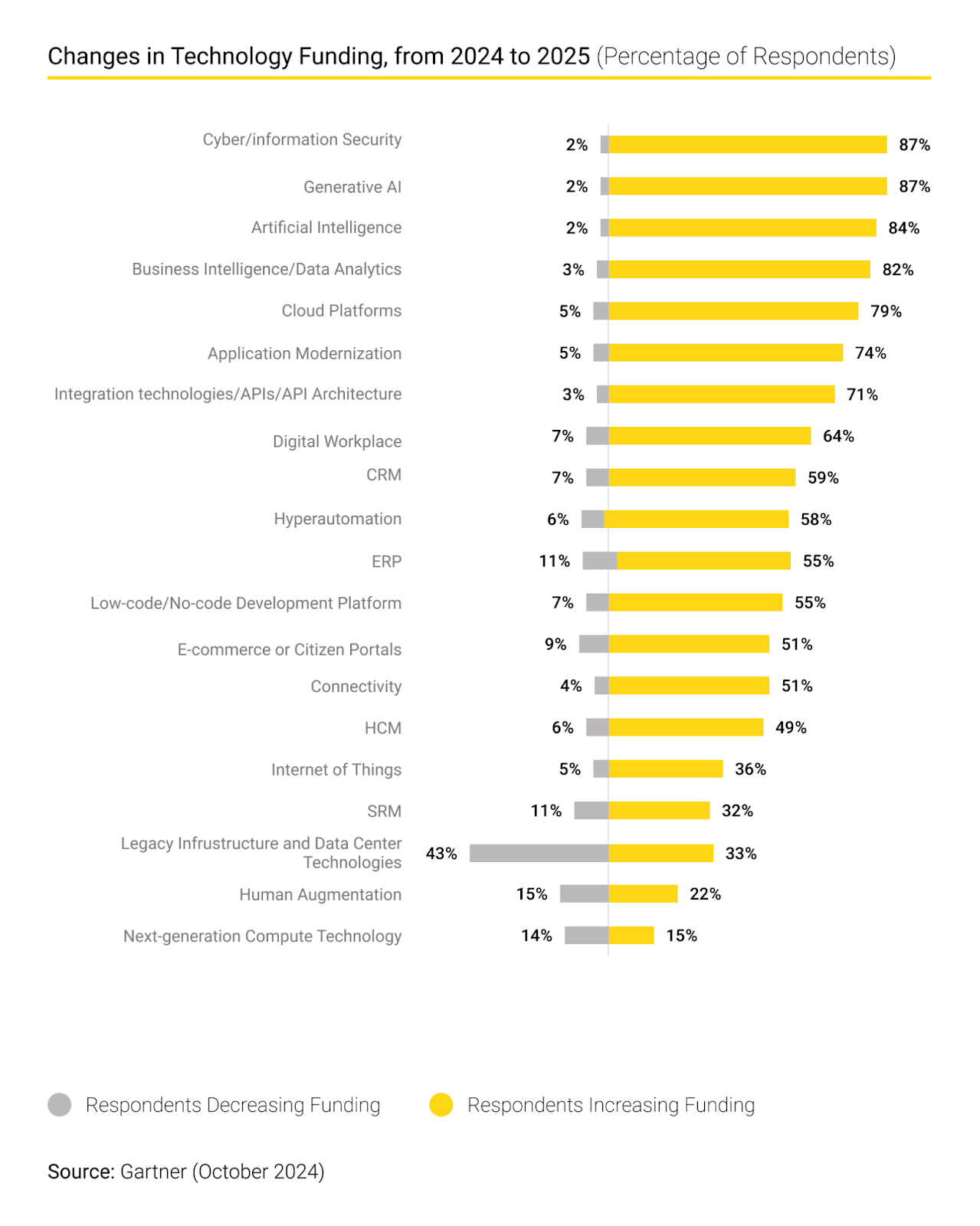
To demonstrate the relevance of technology adopted by companies, we provide the infographics below reflecting an increase in funds that companies allocate to each technology:
Final thoughts
In this article, we’ve analyzed the areas where technology drives business transformation: the evolution of business and operating models, the optimization of organizational workflows, the enhancement of products, and the improvement of both employee and customer experiences. To summarize, digital transformation is not about adopting advanced technology in silos. Companies must shift from conventional thinking to a more collaborative and experimental mindset to integrate innovation into their overall business strategies. In this context, technology becomes a strategic enabler that increases resilience, improves adaptability, and ensures a competitive edge. Accordingly, digital transformation should be viewed as an essential, ongoing process integral to long-term growth.
References:
- O’Brien, Keith, and Amanda Downie. “What Is Business Transformation?” IBM, September 9, 2024.
- Chamorro-Premuzic, Tomas. “The Essential Components of Digital Transformation.” Harvard Business Review, November 23, 2021.
- Accenture. “Change Reinvented: A New Blueprint for Continuous, Meaningful, Successful Change.” Accenture, July 23, 2024.
- McKinsey & Company. “What Is Digital Transformation?” McKinsey & Company, August 7, 2024.
- Turner, Jordan. “These Are the Top CFO Priorities for 2022.” Gartner, January 29, 2022.
- CorporateLeaders and PTC. Digital Transformation Survey: Creating Products and Services in a Digital World. 2018.
- Baker McKenzie. 2021/2022 Digital Transformation & Cloud Survey: A Wave of Change. December 2021.
- BBC Newsbeat. “Netflix’s History: From DVD Rentals to Streaming Success.” BBC News, January 23, 2018.
- SanchezArmas, Carla. “Uber vs. Taxi.” Harvard Business School Digital Initiative, March 31, 2020.