By Francis King
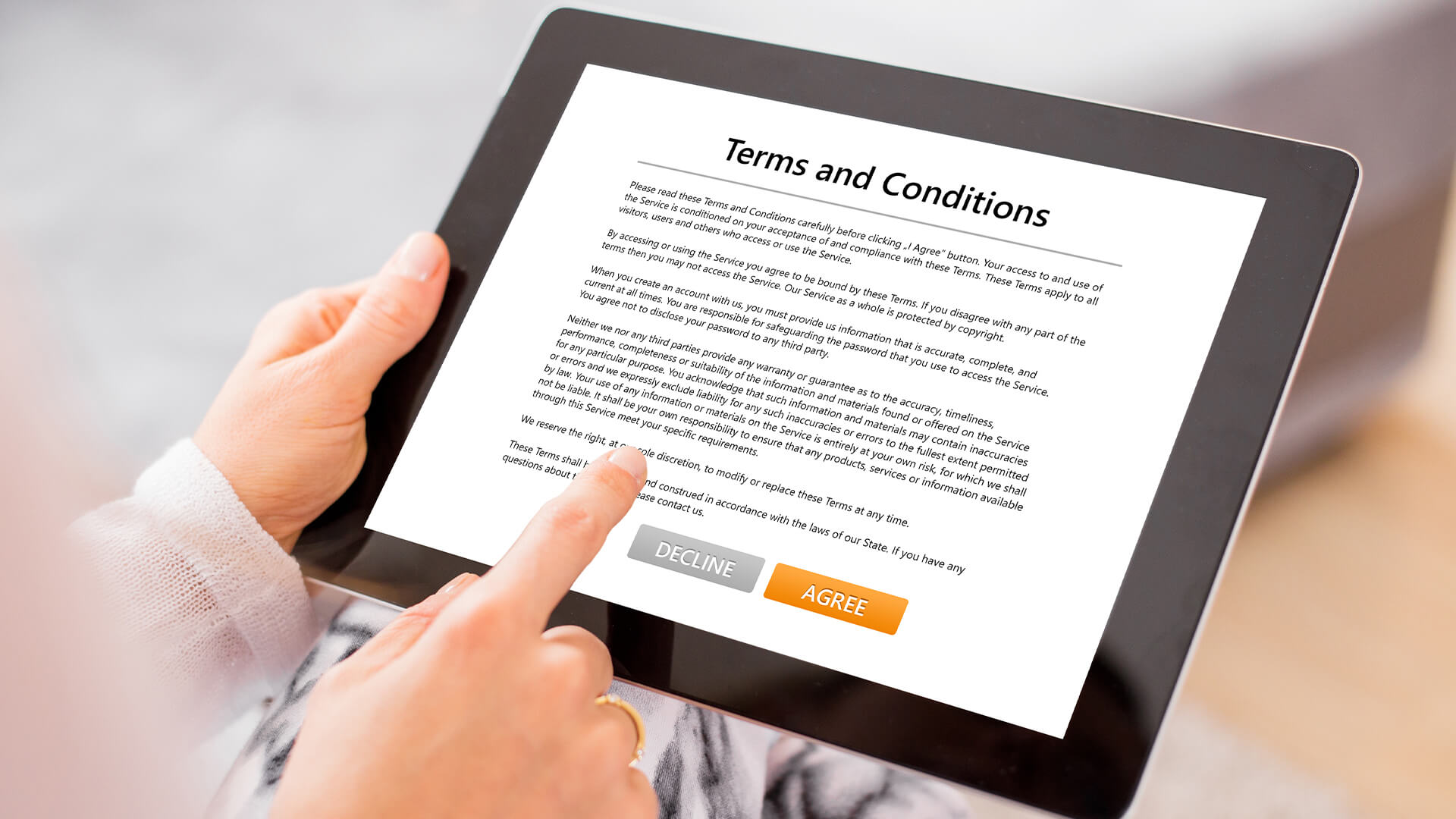
We’ve all seen terms and conditions agreements. They’re those things you click past when you’re updating iTunes. Unless you’re on the side that’s setting those terms, you probably don’t pay them much attention. That’s okay. I won’t judge you.
When you’re setting up a website, you’ll have a lot of questions to answer. How much does a domain name cost? How do I establish a brand? How do I optimize for SEO? You might not think, “Do I need a terms and conditions agreement?” though.
If you’re setting up a new business or launching a website, you’re going to need to get familiar with terms and conditions agreements. We’re going to cover what an agreement is, what it’s for, and how to create one or get the help you need to do so.
What is a terms and conditions (T&Cs) agreement?
Put simply, it’s a set of rules that users of a platform or service agree to abide by. If you’ve ever signed up for a social media account, then you’ve signed one. It might have been called a Terms of Use (ToU) agreement or a Terms of Service (ToS) policy.
But it’s more than just a charter. The terms of the agreement are binding. This means that using these terms can give you legal protection when it comes to liability, account terminations, and more.
When do I need them?
Any business that provides a service or a product for ongoing use needs T&Cs. Whether your website is ecommerce-based or just has a user account system, a T&C agreement is a good choice.
Unlike your privacy policy, a T&C agreement isn’t a legal requirement for your business. So you won’t be forced to have one. It’s more of a safety net for your business. If you’ve set out the rules clearly, it’s much easier to enforce them.
For example, imagine you have an online business that provides custom domain emails. You probably want to automatically ban bot accounts using your service for email spam. A T&C agreement gives you the basic legal grounds to do this without consequences.
Why does my website need terms and conditions?
The example above is just one use case. There are a variety of reasons why having a T&C agreement will be beneficial to your online business. Let’s look at those in a bit more detail.
1. Protection
Disclaimers on your website can protect your business from problems beyond your control. These will often cover the specifics of your product and the terms on which it is offered.
It is good practice to also state the path available to customers if the product doesn’t meet the terms. Amazon’s similar disclaimer states customers must return incorrect products unopened.
2. Content ownership
Protecting your content is important. If you don’t protect intellectual property rights, it’s very easy to lose them altogether. Your website ToS should set out your ownership of your websites’ content, including branding.
You also need to include a statement that users must agree not to reproduce/redistribute content without consent. This is important as it allows you to back up DMCA filings and takedown requests.
This usually won’t apply to user-generated content or zero-party data.
Unauthorized content sharing is very common. It’s also hard to prevent. Having T&Cs helps you support a legal claim to ownership.
3. Limiting liability
Malicious users on your website is a fact of doing business online, whether it’s hackers, phishing scams, or direct exploits. Your business has a legal responsibility to protect your customers.
Their personal information is covered under your privacy policy, so that’s a little different. But what about damages that could be incurred for users due to bad actors online?
If you’ve got established T&Cs and you’re working to prevent issues like these, then you’ll be okay. Your customers will have official channels to pursue indemnification. If you don’t, you could find yourself liable for unlimited amounts of damages.
The limitation of liability clause also protects you from unusual claims, such as property damage caused via service outage.
4. Applicable legislation
Your business will need to abide by governing law. Usually, this will be the laws of the country you are based in. However, some businesses may choose the governing laws of other territories. This could be due to conducting business mostly overseas, etc.
You’re free to choose which governing law is applicable to your website. You should state which set of laws you follow in your T&Cs. No clause in your T&Cs can contradict these laws; otherwise, it will be invalidated.
5. Contract termination
If you have user accounts or service contracts, you’ll need to set out what happens on termination. Consider whether you’ll need to be able to terminate immediately or with notice.
This clause will also set out your rights and your users’ rights upon termination. It’s best practice to also include the actions your customers can take to challenge incorrect suspensions and terminations.
But Apple’s termination clause also includes a statement about outstanding balances, requiring users to settle outstanding amounts following termination.
6. Setting expectations
Your ToS or T&Cs should include a code of conduct. It should be obvious to outline that malicious online behaviours won’t be tolerated. Harassment, identity theft, virus threats, you’ll see it all in online service and ecommerce.
There are legal protections in place to deal with the threats mentioned above if necessary. That doesn’t mean you should ignore non-criminal abusive behaviour. If you want to foster a welcoming and respectful community, you can set further rules for members.
Maybe you want to ban swearing to keep a chat family-friendly. Or you want to prohibit political slogans and symbols in your comments to avoid controversy. Setting these rules out in your T&Cs often pre-empts problems. It also helps you enforce the rules consistently.
7. Billing and collection
If your site only offers free members’ accounts, you won’t need this clause. Any business that’s selling a product or service online will need to set out payment terms, though.
If you’re offering subscriptions, you need to set out collection dates and regularity. Acceptable methods of payment need to be listed. You also need to outline your refund policy. You may also use this section to outline any actions taken for missed payments.
Due to their diverse services, this part of Apple’s ToS is huge.
8. Enforcement
If you want to take legal action, you need a solid basis for your claims. Say that a breach of contract occurs, and you need to go to court. Established T&Cs form the backbone of your argument.
This clearly sets out that these terms are legally enforceable. It also defines the actions needed for a user to agree to the terms. This is important. If a user has completed this action, then this is enough to demonstrate that they have ‘read’ the terms and conditions for enforcement purposes.
Creating agreements and where to go for help
The above steps are a good guide to the basics of T&C agreements. It’s far from an exhaustive list, though. If you want to create one yourself, there are online resources available. If you’re just starting out as a small business, it’s advisable to get some third party help.
Your internal legal team or external legal consultants will be the best people to help you write your T&Cs. Knowing the standard legal boilerplate is fine. Knowing the specific problems your business might face takes experience.
Conclusion
There are many areas where new businesses need assistance. Whether it’s website migration expertise or legal advice, don’t be afraid to seek external help on matters.
You might not be able to give the io domain definition, but there’s a consultancy out there that can answer that question in minutes.
Setting out terms and conditions or terms of use is a vital step in protecting your business. If you’re worried about the cost of third-party services, compare it to the potential cost of legal action.
Damaged reputation and lost revenue are just two concerns. Make sure your business has the basic framework in place to protect your online assets.