
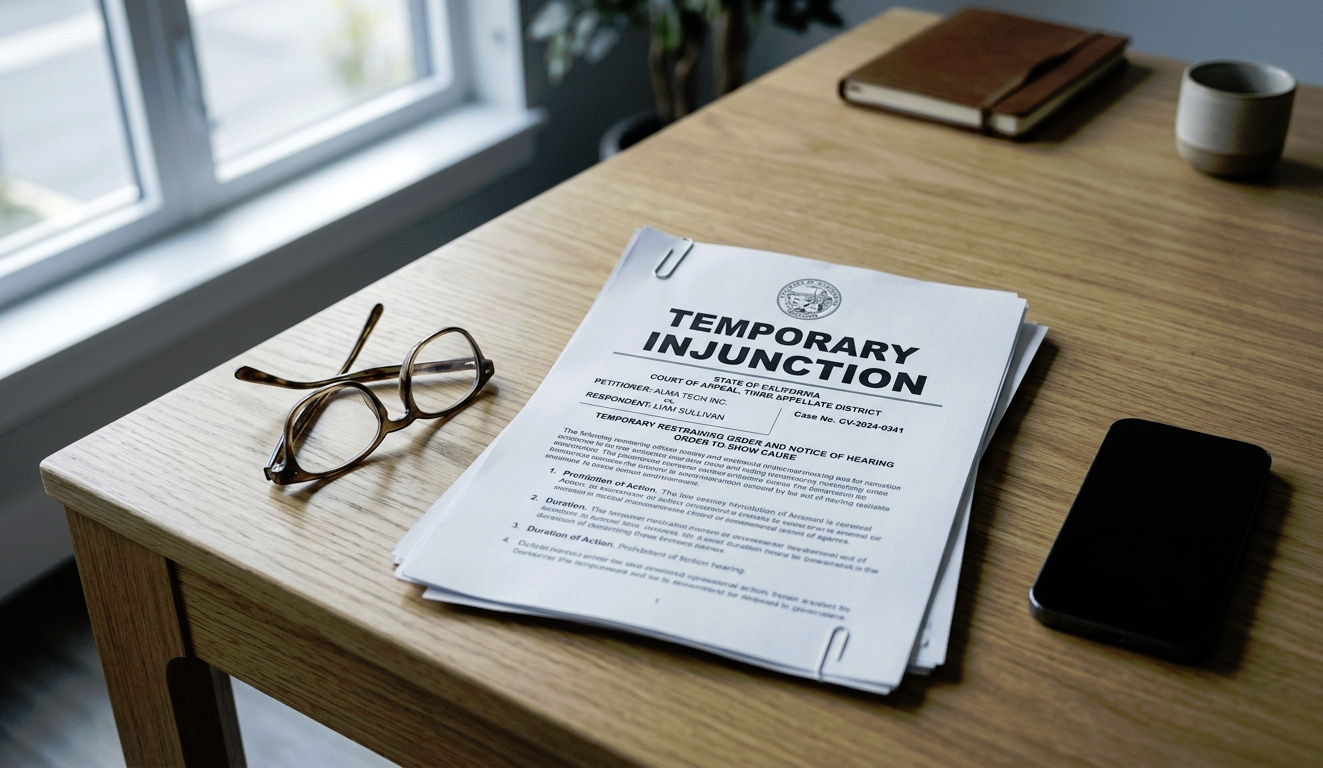

There are millions of injunctions for protection filed in the United States every single year. These cases move at a blistering pace compared to standard litigation. You usually only have about fifteen days from the moment you are served until you must stand before a judge to defend your rights.
The moment a law enforcement officer hands you a temporary injunction, your legal reality changes instantly. You are likely feeling a mix of shock and frustration, but the most important thing to understand is that this document is a court order, not a suggestion. Ignoring it or reacting emotionally can lead to immediate arrest and long-term damage to your reputation.
The first thing you must do is read every single page of the paperwork. While you might want to toss it aside in anger, the temporary injunction section contains specific conduct restrictions that apply to you right now. If the order says you cannot be within 500 feet of a certain address or contact the petitioner via a third party, those rules are active the second you are served.
Silence And Distance Are Your Best Friends
Your natural instinct might be to call the person who filed the injunction to clear things up or explain your side of the story. Do not do this.
Any attempt to contact the petitioner, whether by text message, DM, or by asking a mutual friend to pass along a message, is a criminal violation of the temporary injunction. Even a “happy birthday” text can land you in jail while you wait for your hearing.
Local legal support is essential. It is highly recommended that you talk with an injunction lawyer in Kissimmee to ensure you do not inadvertently violate an injunction served in Florida, for example. Professionals who handle these cases daily can help you navigate the nuances of no-contact orders, especially if you share children or a residence with the petitioner.
Once you have secured your physical and digital distance, you need to begin gathering evidence. The petitioner has already told their story to a judge to get the temporary order. Now you need to prepare the facts that support your version of events.
You should focus on gathering these specific items:
- Screen captures of all recent text messages and call logs with the petitioner
- Receipts or GPS data that prove your location during alleged incidents
- A list of witnesses who saw the interactions mentioned in the petition
Preparing For Your Return Hearing
The return hearing is the most critical date on your calendar. This is the trial where a judge decides if the temporary injunction should be dismissed or turned into a permanent injunction that could last for years. Under Florida Statute 741.30, which serves as a standard model for many jurisdictions, the court will consider evidence of an immediate threat or a history of violence to determine whether the injunction is necessary.
You cannot afford to treat this like a casual conversation. This is a formal legal proceeding where the rules of evidence apply.
If you show up and simply say they are lying, you will likely lose. You need to present organized evidence and, if appropriate, cross-examine the petitioner to highlight inconsistencies in their testimony.
A permanent injunction carries heavy consequences. It can show up on modern background checks, prevent you from owning a firearm, and impact your ability to secure certain types of employment. Because the burden of proof in these hearings is lower than in a criminal trial, the judge only needs to believe that there is a preponderance of evidence to rule against you.
Take the time to write out a timeline of events while your memory is still fresh. Compare your timeline against the allegations written in the petition. If there are dates and times that do not align with reality, those discrepancies will be the foundation of your defense.
Protecting Your Future Legal Standing
How you handle the first 48 hours after being served often dictates the outcome of the entire case. Judges look unfavorably on respondents who show up to court with a history of violating the temporary order. By following the rules perfectly, you demonstrate to the court that you are a law-abiding individual who respects the judicial process.
For more insights on navigating the complexities of the modern world, checking out other articles on our blog can provide clarity across a range of contexts, from business finance to legal innovation.