
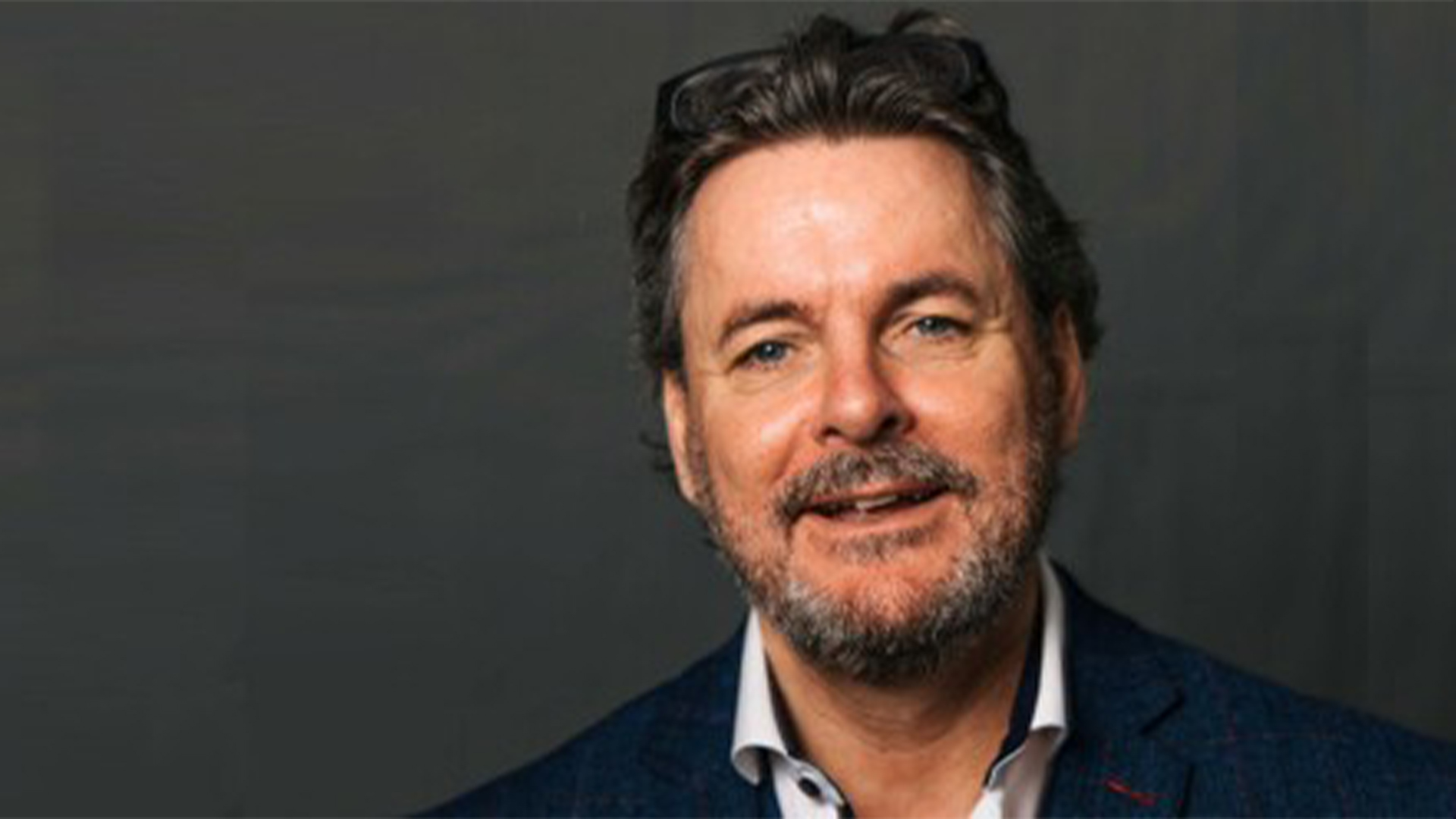
This exclusive interview with Felix Riley was conducted by Tabish Ali of the Motivational Speakers Agency.
Felix Riley is a strategy speaker, facilitator and Moonshot Strategist who helps organisations rethink how they make decisions, challenge assumptions and use human judgement in the age of AI.
His authority comes from an unusual career across comedy, finance, entrepreneurship and business strategy. He has written for BBC radio and television, built and sold ChoiceOdds to MF Global, served as Managing Director and Global Executive member at MF Global, and later worked as a business strategist advising leaders across sectors.
In this exclusive interview with the Inspirational Leadership Speakers Agency, Felix Riley discusses why failure should be treated as data, why silos form so naturally inside global organisations, and where human value increases as AI takes over more routine work.
Question 1. How does someone’s relationship with failure change when it is treated as feedback rather than as a personal judgement?
Felix Riley: “The entire attitude towards experience changes into something positive.
“Most of life involves failing before succeeding. When you pick up a guitar for the first time, you fail for weeks or months before you can strum tunes. When a child learns to walk, they fail for months before they succeed.
“We have created this idea that failure is a bad thing. I have two grown-up girls, and I always told them that the definition of failure is not trying. If you try, you have not failed. You are already a success in my book.
“Once you try and get in the race, if you do not succeed by the measure you have set for yourself or by the measure of people around you, that is data. You learn from it and go back and do it better. Or you may realise you should not be doing that because it is the wrong thing to do.
“Nelson Mandela said, “I never fail. I either win or I learn.” That is my attitude to failure.”
Question 2. Why do national, cultural and functional silos form so easily inside global organisations?
Felix Riley: “I do not think we realise just how influenced we are by our environment.
“I grew up on a council estate, and culturally across the estate we had very low expectations. Most of my friends went on to have very modest careers. Some ended up in gaol. Some ended up dead.
“If you grow up in that environment versus a very affluent area, where everyone is going to private school, everyone has lovely cars and all the parents do impressive things, those children have a different start in life. They grow up with expectations of great careers.
“We can understand that in Britain as rich versus poor, but it applies globally too.
“I have worked in copper mining in Zambia, and many of the people I met had a beautiful attitude. A lot of them were very simple in what they wanted. They wanted enough money to put food on the table and to take Friday night off.
“In a global organisation, you have to celebrate those differences and learn from each other. You might look at another culture and think, “That is a nice attitude,” but you also have to find a common language that pulls the company together.
“Everybody should be able to celebrate being Danish, Norwegian, Zambian, or whatever their background is. That should be alive and kicking in their part of the company.
“But we also need a common language where people unify and realise they are a massive boon to each other. The differences are the bonus.”
Question 3. As AI removes more routine work, where does human value become more important?
Felix Riley: “I think AI will eventually prove exciting, but the hype around it is too much.
“I do not believe it is artificial intelligence. It is machine learning. AI is a marketing term. Large language models have peaked in one sense, and what we are going to see now is the application stage, where apps built on top of those engines become better and more useful.
“AI will prove useful. A lot of grunt work will go, but I do not think the threat of it taking everyone’s jobs is true. Some companies will mistakenly try that, and certain tasks will be taken away, but that should free people up to use the human edge.
“What people want is humans.
“If I go into a law firm, I am happy for there to be a solid AI system in the background doing documentation and communication. But I still want to know whether the person advising me is smart, creative and innovative about my problem.
“I want confidence that they can guide me through the ambiguity of the legal process.
“In the funniest way, the less we have to do, the more we are free to be.
“The smartest companies, including law firms, are already saying they need to upskill human skills, because those skills are going to be everything in the future.”