
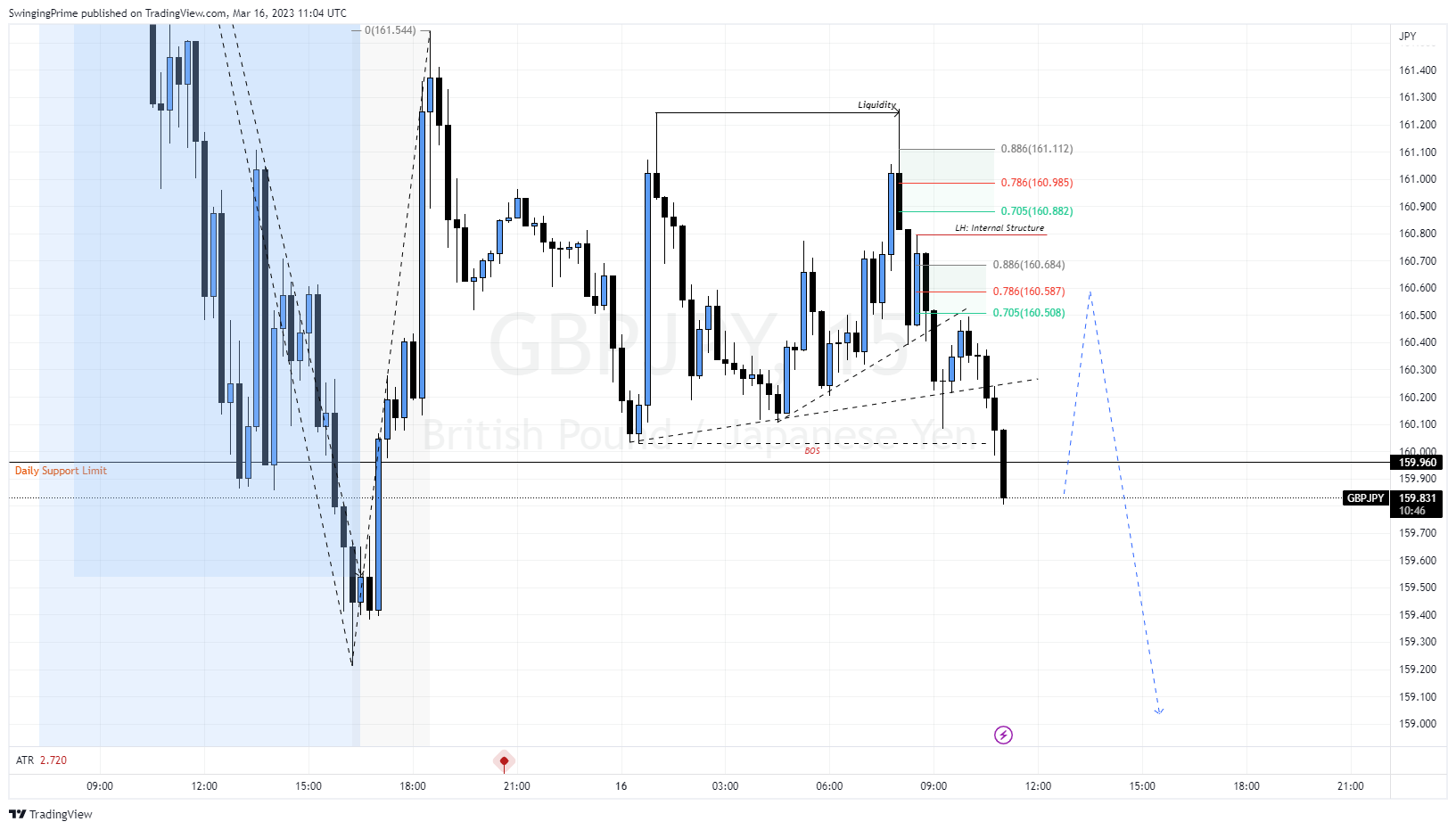

The British pound and Japanese yen form a cross-currency market that can experience substantial price movements when monetary policy, economic data, or broader risk sentiment changes. For market participants studying gbpjpy, understanding the relationship between the two economies provides useful context before evaluating price behavior.
The pair is particularly notable because the yen has historically served as a lower-yielding funding currency, while sterling can respond strongly to changes in UK interest-rate expectations. This combination can produce extended trends as well as rapid reversals when carry positions are reduced, or market conditions shift.
Understanding the Pound-Yen Currency Pair
The exchange rate represents how many Japanese yen are required to purchase one British pound. Unlike major currency pairs involving the US dollar, this cross reflects the relative strength of two economies without direct dollar exposure. Its price therefore responds to developments affecting both sides of the quotation.
Trading conditions can change quickly because monetary policy expectations in London and Tokyo can move independently. A widening interest-rate advantage for the pound can support upward pressure, while stronger expectations for Japanese tightening can strengthen the yen and weigh on the cross.
What Drives Price Movements?
Interest-rate expectations remain one of the most important influences. The Bank of England held Bank Rate at 3.75% in July 2026, while three members favored a 25-basis-point increase. Inflation had fallen to 2.6%, although policymakers expected energy-related pressures to push inflation higher later in the year.
Japan presents a different policy backdrop. The Bank of Japan has been moving toward normalization as inflation remains elevated, with its July outlook noting risks from energy prices, AI-related demand, and yen depreciation. Recent commentary from BOJ officials has also reinforced expectations that further tightening could occur.
Interest-Rate Differentials
The gap between UK and Japanese interest rates can influence capital flows and carry-trade positioning. When traders expect the UK to maintain relatively higher yields, sterling may receive support against the yen. Shifting expectations can reverse that dynamic rapidly.
Inflation Expectations
Inflation data can reshape assumptions about future central-bank decisions. Persistent UK price pressures may strengthen expectations for tighter policy, whereas Japanese inflation developments can increase the probability of additional BOJ action and alter demand for the yen.
Economic Growth
Growth indicators provide another layer of fundamental analysis. Stronger UK activity can improve confidence in sterling, while resilient Japanese growth can reinforce expectations for policy normalization. Weak readings in either economy may instead encourage defensive positioning.
Risk Sentiment
The pair can also react sharply to changes in global risk appetite. The cross is sensitive to risk-off moves because carry trades can be unwound when investors reduce exposure to riskier positions. Such reversals can create sizeable directional moves.
Reading Technical Signals Effectively
Technical analysis can help traders assess momentum, trend structure, support zones, resistance areas, and potential reversal points. Dedicated market page provides charting, technical summaries, seasonal information, economic-calendar access, news, and community ideas for the cross.
A balanced approach can combine several timeframes rather than relying on a single chart interval. Longer-term charts can establish the broader trend, while shorter intervals can help identify entries, consolidation ranges, breakouts, and changes in momentum without treating any individual signal as conclusive.
Managing Volatility and Market Risk
The pair’s volatility makes position sizing and risk controls especially important. Large movements can occur around central-bank announcements, inflation releases, employment data, geopolitical developments, and unexpected shifts in market expectations. A strategy that ignores these catalysts can face rapid adverse price changes.
Traders can consider several elements when building a structured process:
- Define invalidation levels before entering a position.
- Compare potential reward with the amount placed at risk.
- Monitor scheduled economic releases from both countries.
- Avoid assuming that historical price patterns will repeat.
- Reassess exposure when monetary-policy expectations change.
- Use multiple timeframes to distinguish trends from short-term noise.
Using Market Tools for Better Analysis
A systematic workflow can make currency research more consistent. Charts can be used to examine price structure, while alerts can help identify predefined market conditions without requiring continuous manual monitoring.
Chart-Based Analysis
Chart analysis can reveal trend direction, consolidation, breakouts, and recurring support or resistance zones. Traders can adjust timeframes to examine both broader structure and shorter-term movement before forming a market view.
Moving Averages
Moving averages can help organize directional information by smoothing price fluctuations. Their usefulness depends on context, since a crossover during a sideways market can carry a different implication from the same signal during a sustained trend.
Momentum Indicators
Momentum tools can help assess whether buying or selling pressure is strengthening or fading. They are most useful when interpreted alongside price structure, rather than being treated as independent instructions to enter or exit.
Alerts and Monitoring
Alerts can help traders react to predefined conditions without constantly watching the chart. Custom conditions can be particularly useful when a strategy depends on a specific price level, indicator relationship, or chart event.
Economic Calendar
Scheduled events deserve attention because monetary-policy decisions and major economic releases can produce abrupt price adjustments. A calendar-based workflow helps traders identify periods when technical setups may face elevated fundamental risk.
Community Ideas
Market ideas can provide additional perspectives on technical structures and potential scenarios. They should be evaluated critically, however, because published analysis represents individual interpretations rather than guaranteed outcomes.
Final Thoughts
Could a disciplined combination of fundamental research, technical analysis, and risk management improve how traders approach gbpjpy? A structured process can help market participants distinguish genuine shifts in momentum from temporary volatility, while keeping monetary policy and macroeconomic developments in view. For traders seeking an integrated environment for chart analysis, alerts, technical tools, economic information, and market ideas, a financial markets and charting platform brings these capabilities together in one platform, supporting research across different market conditions.
The objective is not to predict every price movement, but to develop a repeatable framework for evaluating opportunities and risks. Careful preparation, clearly defined assumptions, and ongoing review can help traders respond more effectively as expectations surrounding the pound, yen, interest rates, inflation, and global risk sentiment evolve.