
ATS Group CEO Mahdi Al Tahaineh – “The Gulf Is Buying Hundreds of Aircraft. Who Is Going to Maintain Them?”
Major aircraft orders across the Gulf are signalling continued confidence in the region’s aviation industry, but expanding fleets bring long-term maintenance obligations that extend well beyond delivery. Mahdi Al-Tahaineh, CEO of ATS Group, examines whether maintenance planning, component availability and technical support arrangements are keeping pace with the region’s ambitions.
By Mahdi Al-Tahaineh
The Gulf’s aviation industry continues to attract international attention through substantial aircraft orders and ambitious fleet expansion plans. Airlines across the region are investing in new aircraft to serve growing passenger demand, strengthen their international networks and improve operational efficiency. These commitments reflect considerable confidence in the industry’s long-term prospects, but they also raise an important question about the practical requirements of supporting much larger fleets.
Every aircraft entering service brings a maintenance obligation that will continue throughout its operational life. Engines must be inspected and overhauled, components require replacement, and aircraft need regular checks to remain compliant with demanding safety standards. While these requirements are well understood within the industry, they receive considerably less public attention than the commercial announcements surrounding new aircraft purchases.
In my view, the Gulf’s next aviation challenge is not simply acquiring the aircraft needed for future growth. It is ensuring that the maintenance capacity, technical support and supply arrangements required to operate those aircraft are planned and developed well in advance.
Aircraft orders are only the beginning
The scale of recent investment is substantial. In November 2025, flydubai announced an agreement with Airbus for 150 A321neo aircraft, with options for a further 100 aircraft. The agreement marked an important development in the airline’s fleet strategy and demonstrated the continuing ambition of Dubai’s aviation sector.
Elsewhere in the Gulf, Qatar Airways announced an agreement with Boeing in May 2025 covering up to 210 widebody aircraft, including 160 firm orders and 50 options. The airline also announced a major engine agreement with GE Aerospace to support its future fleet.
These are significant commitments, and their implications extend far beyond aircraft acquisition. Each new aircraft type introduces requirements for maintenance programmes, tooling, spare parts, technical documentation and appropriately qualified personnel. Where an airline operates several aircraft families, those requirements can become increasingly complex.
The timing of these investments is particularly important. Maintenance capability cannot always be expanded as quickly as an airline’s fleet, especially where specialist equipment, regulatory approvals or technical training are involved. Operators therefore need to consider how their maintenance requirements will evolve over the coming years, rather than concentrating solely on the immediate demands of aircraft delivery.
Fleet expansion is ultimately a long-term operational commitment, and the ability to support an aircraft throughout its service life is just as important as the decision to purchase it.
Maintenance demand is not always predictable
Aircraft maintenance involves a combination of scheduled work and unexpected technical requirements. Airlines can plan for routine inspections, component replacements and major maintenance checks, but unanticipated faults and operational disruptions can create additional demands that are difficult to forecast precisely.
This distinction matters because maintenance capacity must accommodate both. A facility may have sufficient resources to complete its planned workload, but an unexpected increase in demand for a particular engine or component can affect turnaround times and the availability of replacement parts.
The wider aviation industry is already experiencing these pressures. According to Oliver Wyman’s Global Fleet and MRO Market Forecast 2026–2036, the Middle East is expected to experience annual fleet growth of approximately 5% over the next decade, placing it among the faster-growing aviation markets.
However, fleet growth does not necessarily translate into a straightforward or evenly distributed increase in maintenance demand. Aircraft age, utilisation, engine type, operating environment and maintenance schedules all influence when technical work is required.
An airline operating a relatively young fleet may initially have different maintenance requirements from one operating older aircraft, while the introduction of a new aircraft type can create demand for specialist services that were not previously needed.
For this reason, maintenance planning needs to consider the composition and operational characteristics of a fleet, not simply the number of aircraft it contains.
The challenge of keeping aircraft in service
The availability of aircraft components is another important consideration, particularly when operators are working to demanding schedules. A maintenance provider may have the facilities and technical personnel needed to complete a repair, but the aircraft cannot necessarily return to service until the required parts and documentation are available.
This has become a growing concern across international aviation as manufacturers and suppliers continue to face production constraints, longer lead times and difficulties meeting demand.
In October 2025, IATA and Oliver Wyman estimated that aerospace supply-chain challenges would cost airlines more than $11 billion during the year. Their assessment included approximately $3.1 billion in additional maintenance costs, alongside higher engine leasing expenses and increased expenditure on spare-parts inventories.
These figures demonstrate that supply-chain difficulties are not simply an inconvenience for maintenance departments. They can have substantial financial consequences for airlines, affecting aircraft availability, operating costs and the ability to maintain planned schedules.
For Gulf operators preparing to expand their fleets, this reinforces the importance of dependable component sourcing and effective inventory planning. Businesses need to understand which parts are most critical to their operations, where supply constraints may arise and what alternative arrangements are available when normal delivery schedules cannot be maintained.
There is also a responsibility to ensure that urgency does not compromise established technical standards. Aircraft components must have appropriate documentation and traceability, and operators need confidence that the parts they receive meet the relevant regulatory and operational requirements.
The objective is not simply to obtain a component as quickly as possible, but to provide a reliable solution that allows an aircraft to return to service safely and with confidence.
Planning maintenance alongside fleet expansion
The Gulf has already developed significant aviation maintenance capabilities, supported by established airlines, specialist service providers and international technical partnerships. However, continued fleet growth will require operators to assess whether those arrangements remain appropriate as their aircraft numbers and maintenance requirements increase.
Some airlines may choose to expand their own engineering operations, while others will continue to rely on independent maintenance organisations and international service providers. Both approaches can be effective, depending on the size of the fleet, the aircraft types involved and the commercial requirements of the operator.
The important consideration is ensuring that maintenance arrangements are sufficiently flexible to respond to changing demand.
In June 2026, IATA identified four priorities for strengthening the aviation supply chain, including improving supply-chain visibility, increasing access to the aftermarket, making better use of data and developing the industry’s workforce. These priorities are particularly relevant to airlines planning significant fleet expansion, as they address some of the structural challenges that can affect maintenance availability and cost.
Better information about component availability and repair times can help operators make more informed decisions, while stronger relationships with suppliers and maintenance providers can improve their ability to respond to unexpected requirements.
There is also a commercial balance to consider. Maintaining large inventories of spare parts can provide reassurance, but it ties up capital and may not always represent the most efficient solution. Equally, relying entirely on components being available at short notice can expose an operator to unnecessary disruption.
Effective planning involves understanding those trade-offs and developing arrangements that reflect the actual risks and operating requirements of the fleet.
A long-term test of aviation competitiveness
The Gulf’s aircraft orders represent an important commitment to the future of international aviation, and the region has demonstrated considerable ability to turn ambitious plans into successful commercial operations. However, the expansion now being planned will place additional demands on the businesses responsible for keeping those aircraft operational.
Maintenance is sometimes viewed primarily as a cost of operating an airline, but its importance extends much further. The availability of reliable technical support influences aircraft utilisation, schedule performance, customer confidence and ultimately the financial return generated by an airline’s fleet.
As new aircraft enter service over the coming years, operators will need to ensure that their maintenance strategies remain aligned with their commercial ambitions. This means looking beyond immediate capacity and considering how technical requirements, component demand and supplier relationships may change throughout an aircraft’s operational life.
The Gulf has shown that it can invest in and operate some of the world’s most successful airlines. Its next challenge is ensuring that the supporting maintenance arrangements are equally capable of meeting the demands of future growth.
Buying hundreds of aircraft is a substantial undertaking, but keeping them operating safely, reliably and efficiently over the following decades will be an equally important measure of success.
About Mahdi Al-Tahaineh
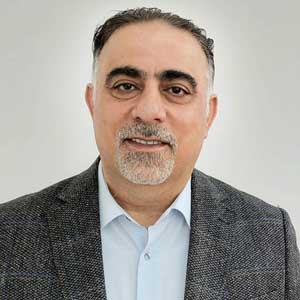
Mahdi Al-Tahaineh is the founder and CEO of ATS Group, a Dubai-headquartered aviation services company established in 2003, with operations spanning the Middle East, Europe and the Americas. An aerospace engineer with more than three decades of industry experience, he has led the group’s expansion into aircraft parts distribution, aviation aftermarket support and maintenance, repair and overhaul (MRO) services. His industry commentary addresses the commercial and operational challenges facing international aviation, including fleet expansion, maintenance infrastructure, component supply chains, regulatory compliance and the development of regional aerospace capabilities.