
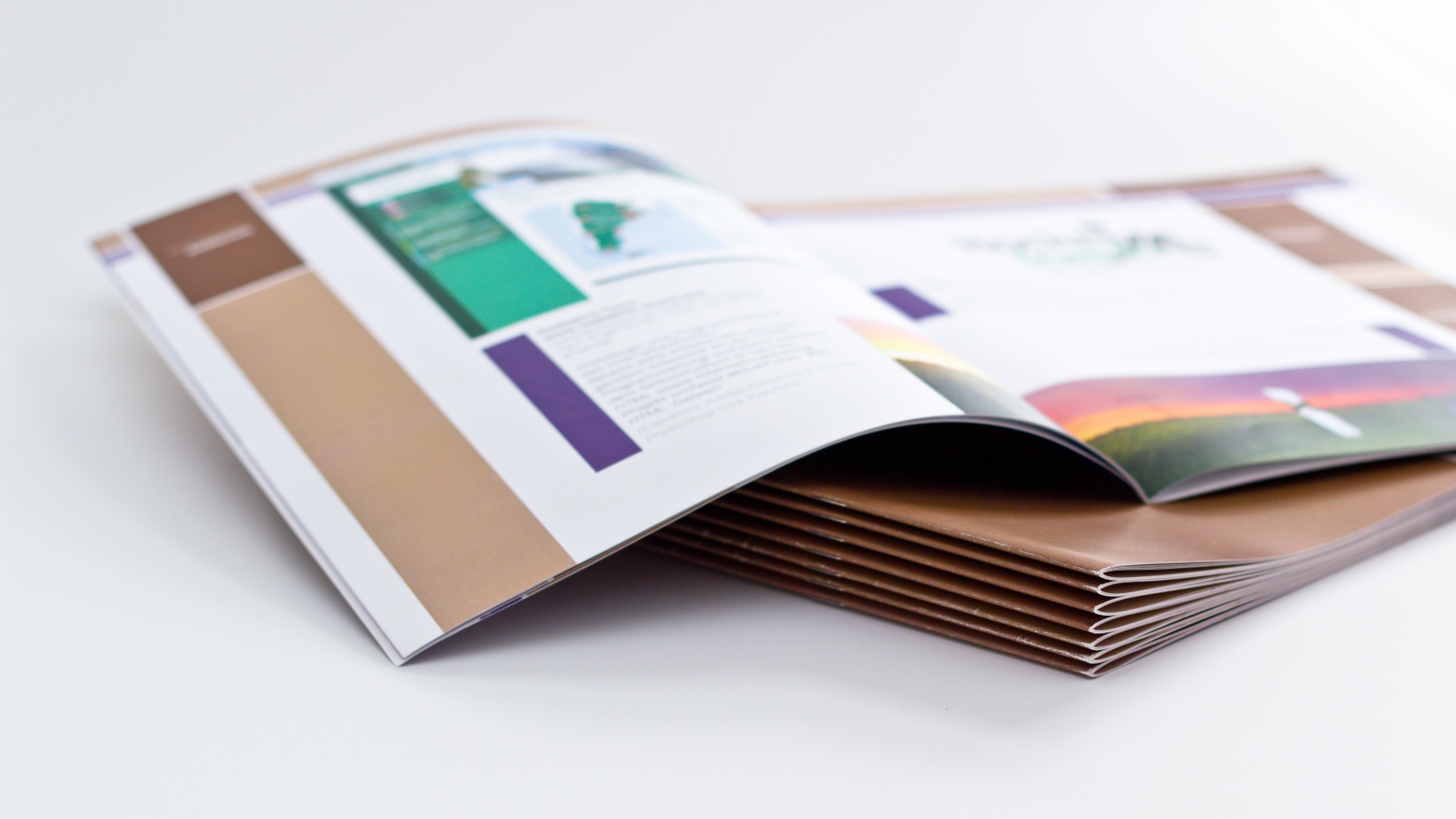

Every deal room ends the same way. Handshakes, a promise to circulate the deck, and an inbox that swallows the file by Friday. The slide deck does its job in the room and then disappears into a folder nobody opens twice. A printed booklet does the opposite. It rides home in a bag, lands on a desk, and sits there in view for a week. In corporate finance, where a decision can stall for a quarter, the thing that stays visible has an edge the attachment never gets. Print is not a throwback here. It is a tactic for being remembered.
Why the object outlasts the file
A pitch deck competes with every other email a buyer received that day. It loses, not because it is weak, but because it is one of forty. A booklet competes with the items on a desk, and there are far fewer of those. It carries weight in the hand, which the brain reads as substance before a page turns. It needs no login and no WiFi. When a director wants to skim your numbers on a train with no signal, the booklet is the only version that works. The format earns its place by being present when the screen is closed.
Where binding and stock do the work
Not every booklet carries the same authority. The first choice is binding. Saddle stitch, where folded sheets are stapled at the spine, suits shorter documents and always runs in multiples of four pages, which makes it the common choice for booklets under roughly 48 to 64 pages. Perfect binding gives a squared spine you can read on a shelf and handles far higher page counts, so it reads as a report rather than a pamphlet. Stock matters just as much. A heavier cover and a coated interior signal care. A team that orders booklet printing with the spec sheet in front of them is making a brand decision, not a stationery one.
When print actually earns its place
Print is not the answer to every document. A weekly update belongs in email. A leave behind earns the cost when the meeting matters and the decision is slow. A first meeting with an acquirer who collects materials, not links. A diligence session where the buyer wants something to annotate. A board that reviews on paper out of habit. In those rooms the booklet does work the PDF cannot, because it survives the walk to the car. Helloprint, a print platform that is B Corp certified with a B Lab score of 87, exists because that demand never left.
The quiet advantage
The deck wins the meeting. The booklet wins the week after. A firm that hands across something heavy and considered is making a small argument about how it handles everything else. Helloprint and its peers are not selling nostalgia. They are selling the one document in the room that does not vanish the moment a laptop closes.