
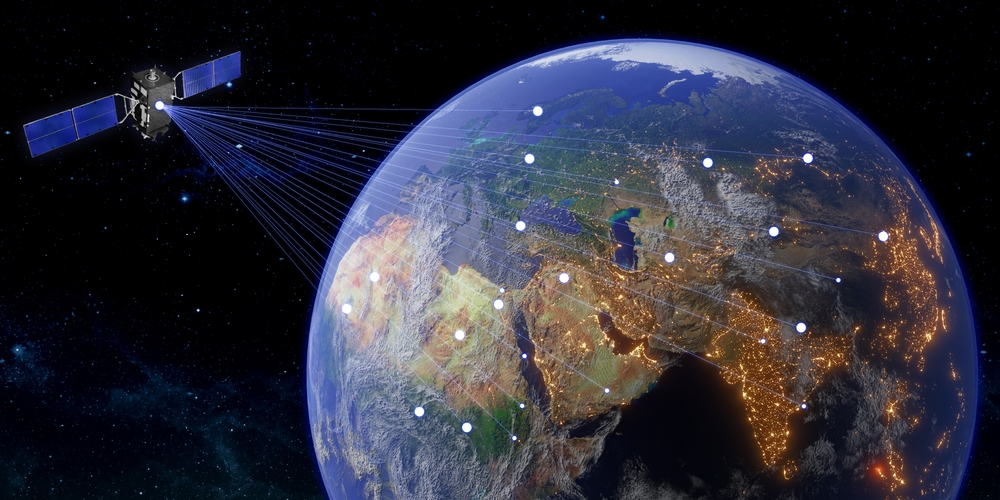

It is easy to think that sharper space images are always better. But buying ultra-high resolution satellite imagery when you do not need it is a costly operational mistake. Take deforestation tracking in the Amazon, for example. Brazil’s space agency (INPE) successfully monitors massive forest loss using free, medium-resolution data between 10 and 30 meters per pixel. They do not need to see individual tree branches to protect the rainforest. For large-scale projects like regional farming or environmental tracking, simpler data gives you exactly what you need without wasting your budget on unnecessary detail.
From Pixels to Footprints: Breaking Down the Resolution Tiers
Spatial resolution is the level of detail you get in the image. It simply measures how much ground space a single pixel covers. To task a satellite to get a high-resolution satellite imagery for your project without blowing your budget, you just need to understand how the four main options on the market stack up:
- Low Resolution (More than 10 meters per pixel): Built for the big picture. Free satellite tools like NASA’s Landsat and Europe’s Sentinel-2 are excellent for tracking large-scale events like wildfire scars, weather patterns, or climate shifts across entire countries.
- Medium Resolution (1 to 10 meters per pixel): Satellites like PlanetScope snap new pictures of your site every single day at a 3-meter resolution. This tier is the perfect everyday workhorse for checking crop health across huge farming regions or watching how fast a city’s suburbs are expanding.
- High Resolution (0.5 to 1 meter per pixel): This is the level where individual objects finally take shape. If you need to see exactly what is happening on the ground, hires satellite images from providers like Airbus give you the clarity you need. At this resolution, you can easily trace new road networks, map out exact building footprints, or count individual shipping containers stacked at a port.
- Very High Resolution (0.5 meters or less per pixel): The sharpest view possible for the commercial sector. This high-resolution satellite imagery from systems like Maxar’s WorldView lets you see exact details on the ground, such as counting individual solar panels on a roof or identifying specific planes on a runway.
The Right Tool for the Job: Real-World Use Cases
Precise Agriculture
To monitor crops across a whole region, farmers don’t need to overcomplicate or spend a million. Free 10-meter data from Europe’s Sentinel-2 satellites is enough. It captures massive areas in a single shot and updates frequently enough to let them watch crops grow throughout the season. The real superpower here is that it gives you high-resolution multispectral satellite imagery. This means the satellite captures invisible light bands, like infrared, that reveal exactly how healthy a plant is before human eyes can even spot a problem.
Port Logistics
Tracking port logistics becomes easier than ever with data from Satellogic’s NewSat with a resolution of 70 to 80 centimeters. It gives enough detail to distinguish different cargo ships, map out container stacks, and see which berths are busy. Sure, 30-to-40-centimeter data is great if you need to track individual forklifts or delivery trucks on the docks. But in busy ports, it is also important how often the satellite passes over this or that location to receive current information. You need constant updates to track how fast ships are loaded and unloaded.
Vehicle Tracking
Speaking about vehicle tracking, it is important to understand what the purpose is. If your goal is counting cars or checking how busy a shopping center or factory is, you really need 30-to-40-centimeter data. Using sharp sensors like SuperView NEO-1 (at 0.3 meters) makes sure cars stand out clearly against the asphalt. If you try using 50-to-60-centimeter high-resolution satellite images, the cars just blur together into messy blocks, making it impossible for automated software to count them accurately.
Deforestation
To control or track illegal deforestation, standard 10-meter data from Sentinel-2 is more than enough. You will be able to spot clear-cut areas and new logging roads. You don’t need sharp and detailed imagery of a single tree. More important is looking at the bigger picture over time. By comparing high-quality satellite images month after month, you can catch gradual forest loss. And since rainforests are famously cloudy, pairing these standard pictures with Sentinel-1 radar data is a lifesaver, as radar cuts right through clouds, so you never miss a moment.
Illegal Mining
Other illegal activities, like illegal mining, can also be tracked, but they need a better resolution to detect. While 1-to-1.5-meter imagery is fine for spotting massive open-pit mines, catching small, hidden operations requires sharper 30-to-40-centimeter data. This level of detail lets you spot actual mining equipment and small dirt paths. Deploying high-resolution satellites alongside radar is the best way to catch illegal digging early, even when it’s hidden deep in cloudy, remote jungles.
Conclusion
And what are the final thoughts on the subject? As we see, extra details and higher resolution satellite images don’t automatically guarantee better tracking. It all comes down to what your goal is. If you need to count cars near a shopping mall, you need a sharp sensor and good resolution. But if you are tracking regional environmental changes, buying the most detailed image just because it looks cool is a mistake. Match the pixel size to the problem you are solving, and you’ll avoid overspending or getting buried under massive files you don’t even need.
______________
Author:
Kateryna Sergieieva
Kateryna Sergieieva has a Ph.D. in information technologies and 15 years of experience in remote sensing. She is a scientist responsible for developing technologies for satellite monitoring and surface feature change detection. Kateryna is an author of over 60 scientific publications.









![The Global Tax [r]Evolution](https://imgcdn.aiglobalmedia.net/acquisition-international/wp-content/uploads/2018/07/b59ea84e-0c19-4332-9436-82f948335d22.jpg?tr=fo-auto,c-maintain_ratio,w-434,h-244,q-100)