

Finding an employment lawyer in Minneapolis is easy. Finding one who represents employees is harder. Many of the city’s employment practices advise and defend companies, so an employee facing discrimination, harassment or retaliation needs to start with firms that work on the worker’s side.
We reviewed Minneapolis firms that represent employees and selected seven that handle workplace discrimination and retaliation claims. Each profile covers what the firm handles, where it’s based and what stands out, so you can build a shortlist before your first call.
Key Takeaways
- Start with plaintiff-side firms, which represent employees rather than employers.
- All seven firms below are based in Minneapolis and handle discrimination or retaliation claims for workers.
- Many employee-side firms work on contingency for discrimination cases, but fee terms vary by firm and matter.
- The Minnesota Human Rights Act generally gives you one year to act, and EEOC charges in Minnesota generally have 300 days.
- Since October 1, 2025, a Minnesota Department of Human Rights charge no longer counts as an EEOC filing, so you may need to file with both.
How We Selected These Employment Lawyers
We looked for Minneapolis firms that state they represent employees, handle discrimination, harassment or retaliation matters and practice in Minnesota state and federal courts. We considered each firm’s areas of focus and the range of employee matters it takes on. This list is a starting point, not a guarantee of results or availability. Confirm any lawyer’s license and public discipline record through the Minnesota Office of Lawyers Professional Responsibility before hiring.
The 7 Best Employment Lawyers in Minneapolis, MN
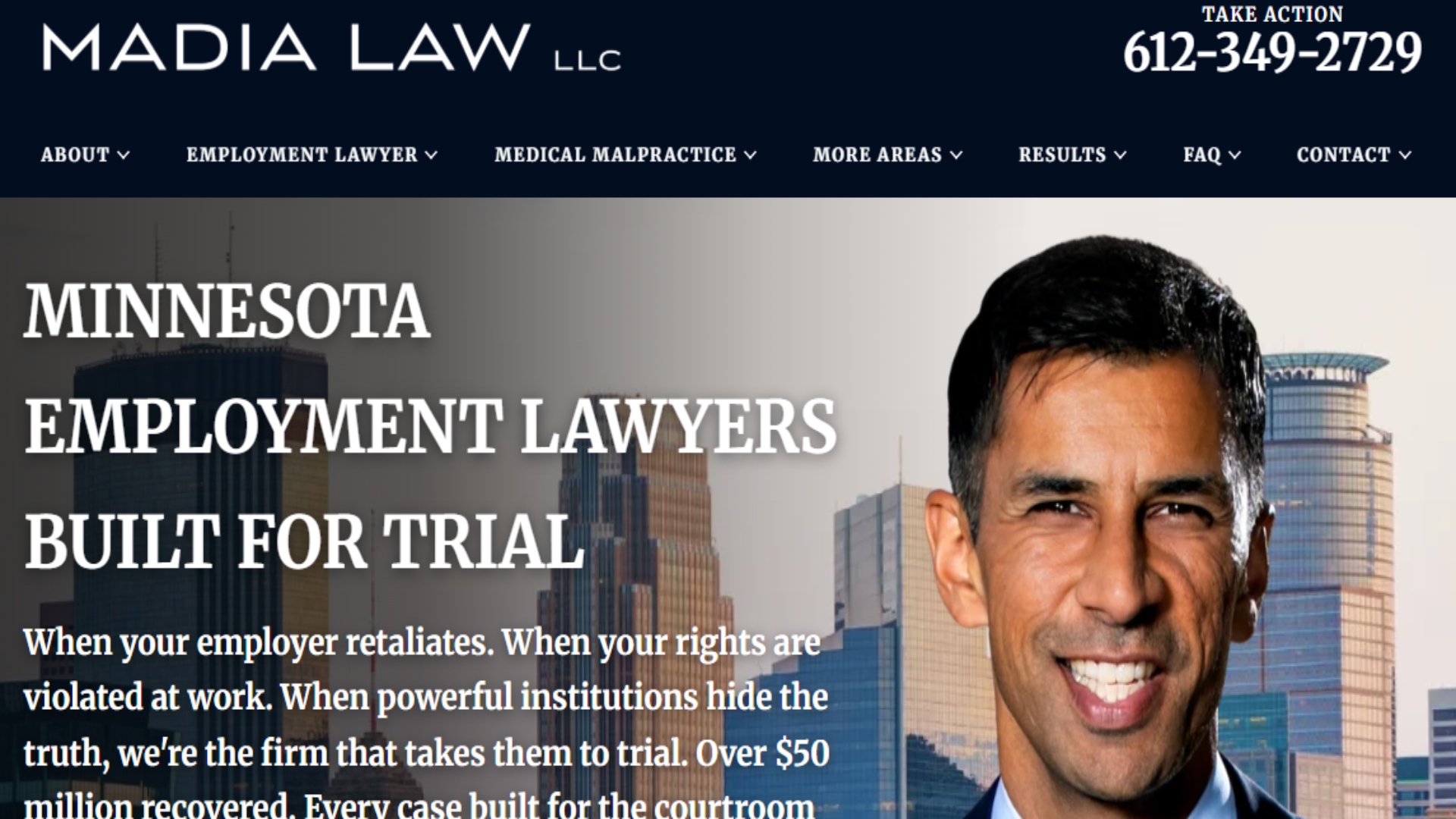
1. Madia Law
What they handle: Discrimination, retaliation, harassment, wrongful termination, whistleblower and severance matters for employees.
Why they stand out: Madia Law prepares every case for trial from day one and has recovered more than USD 50 million for clients. Founder J. Ashwin Madia is a Fellow of the American College of Trial Lawyers.
Where they’re based: The IDS Center in downtown Minneapolis.
Good to know: Employment cases are handled on contingency, so there’s nothing to pay upfront.
2. Halunen Law
What they handle: Discrimination, sexual harassment, pregnancy discrimination, retaliation, wrongful termination and whistleblower claims.
Why they stand out: The firm combines an employment litigation group with a dedicated whistleblower practice, which suits cases where discrimination overlaps with reports of misconduct.
Where they’re based: The IDS Center in downtown Minneapolis.
Good to know: Halunen Law also reviews severance agreements for employees.
3. Nichols Kaster
What they handle: Discrimination, harassment, hostile work environment and wage claims for employees.
Why they stand out: The firm handles both individual cases and class and collective actions, which helps when a workplace problem affects many employees.
Where they’re based: Minneapolis, with a national employee-rights practice.
Good to know: It’s a strong fit if your concern involves pay practices as well as discrimination.
4. Wanta Thome
What they handle: Workplace discrimination, harassment, retaliation and wrongful termination claims.
Why they stand out: Wanta Thome is a plaintiff-side employment litigation firm, and co-founder Joni Thome is certified as an employment law specialist by the Minnesota State Bar Association.
Where they’re based: Downtown Minneapolis, with an office in Chicago.
Good to know: The firm also brings class and collective actions on behalf of workers.
5. Kitzer Rochel
What they handle: Discrimination, sexual harassment, retaliation and whistleblower claims for employees.
Why they stand out: Partners Phillip Kitzer and Brian Rochel have built their practice around representing employees in Minnesota employment disputes.
Where they’re based: Downtown Minneapolis.
Good to know: Brian Rochel has been licensed for 15 years and is a member of the National Employment Lawyers Association.
6. Dufresne Law Firm
What they handle: Discrimination, retaliation, wrongful termination, disability accommodation and wage disputes.
Why they stand out: Founder Danel Dufresne focuses on representing employees in workplace disputes.
Where they’re based: Minneapolis.
Good to know: The firm is a good option if an accommodation request was ignored or denied.
7. Bertelson Law Offices
What they handle: Labor and employment matters for employees, including litigation.
Why they stand out: Founder Beth Bertelson focuses her practice on representing employees in the Twin Cities and throughout Minnesota.
Where they’re based: Minneapolis.
Good to know: The practice also offers mediation services in employment disputes.
When Should You Call a Minneapolis Employment Lawyer?
Minnesota is an at-will employment state, which means an employer can generally end employment for any reason that isn’t illegal. The illegal reasons are broader than many workers realise. Consider a consultation if:
- A manager’s comments or decisions appear tied to your race, sex, age, disability, religion, sexual orientation, gender identity or another protected characteristic.
- You were disciplined, demoted or moved to a worse shift soon after reporting discrimination or supporting a coworker’s complaint.
- Your employer ignored or refused a disability accommodation request.
- You’ve been offered a severance agreement that asks you to release legal claims.
Filing Deadlines Minneapolis Employees Should Know
State claims. Under the Minnesota Human Rights Act, you generally have one year to file a charge with the Minnesota Department of Human Rights or bring a lawsuit.
Federal claims. EEOC charges in Minnesota generally must be filed within 300 days.
Separate filings now required. Since October 1, 2025, MDHR and the EEOC no longer cross-file charges automatically. If you want to protect both state and federal rights, you must file with each agency.
Don’t wait on HR. The EEOC says its filing deadlines generally aren’t extended while you pursue an internal complaint, a union grievance or mediation.
Remote workers. If you work remotely for an employer based in another state, more than one state’s rules may come into play, as this guide to multi-state labor laws for remote teams explains. Mention your work location early when you speak with a lawyer.
How Much Does an Employment Lawyer Cost in Minneapolis?
Many employee-side firms take discrimination and retaliation cases on contingency, meaning the fee comes from any recovery. Other work, such as severance agreement reviews, may be billed hourly or at a flat fee. Before you hire anyone, ask:
- Is the first consultation free?
- What percentage applies on contingency, and is it calculated before or after costs?
- Who pays expenses such as filing fees and depositions if the case doesn’t succeed?
- Which services, such as an agency charge, negotiation or a lawsuit, does the agreement cover?
Get the answers in a written fee agreement before work begins.
How to Prepare for Your First Consultation
Bring a dated timeline of what happened, who was involved and what the employer said. Gather the pay stubs, performance reviews, emails and handbook policies you already have lawfully, and note any agency filings you’ve made. Don’t download confidential employer files or access restricted systems, and don’t delete anything, even messages you regret. A clear record helps the lawyer assess your options quickly.
Frequently Asked Questions
Who are the best employment lawyers in Minneapolis for discrimination cases?
Minneapolis employee-side firms that handle discrimination cases include Madia Law, Halunen Law, Nichols Kaster, Wanta Thome, Kitzer Rochel, Dufresne Law Firm and Bertelson Law Offices. The best fit depends on your issue, so ask each firm about its experience with cases like yours.
Do employment lawyers in Minneapolis offer free consultations?
Many do, but policies vary. Ask before scheduling whether the first meeting is free and what happens next if the firm takes your case.
Can I sue my employer for discrimination in Minnesota?
Yes. The Minnesota Human Rights Act lets employees file with the MDHR or bring a lawsuit, generally within one year. Federal claims usually start with an EEOC charge.
Should I sign a severance agreement before talking to a lawyer?
It’s wise to have it reviewed first. Severance agreements usually release legal claims, which may include discrimination or retaliation claims worth more than the payment offered.
What if I still work for the company?
You can still get advice. Discrimination and retaliation protections apply during employment, including discipline and demotions short of firing.